Showing posts with label Liverpool. Show all posts

Thursday, July 03, 2014

Quaker Alphabet Blog 2014 - M for Mary Southworth Mollineux

Mary Southworth was born in 1651 and brought up in Lancashire, possibly in Warrington. She was an only child and, her cousin tells us, was 'much afflicted with weak eyes, which made her unfit for the usual employment of girls, and being of a large natural capacity, her father brought her up to more learning than is commonly bestowed on our sex, that she could fluently discourse in Latin, made considerable progress in Greek, wrote several hands well, was a good arithmetician, a student of several useful arts, understood physic and surgery and the nature of plants, herbs and minerals, made some inspection into divers profitable sciences and delighted in the study of nature.' Mary also began to write poetry from the age of eleven.

She was convinced while she was still young and in 1684 was imprisoned in Lancaster Castle for attending Quaker meetings in Warrington. It was there that Mary first became acquainted with Henry Mollineux, although they had seen each other before. He says that at this time 'I believed that she should be my wife; but never intended to express any thing thereof, whilst we were both prisoners there; and after she was released, I saw her, and was in company with her several times, before I expressed anything of my concern to take her to be my wife; several considerable men having before attempted to prevail with her on that account.'
Lancaster Castle in 1778

Eventually they were married at Penketh, now a suburb of Warrington, on 10th April 1685. They had two sons to whom they gave the unusual but biblical names, Othniel and Elleazor. The family lived first at Ormskirk and later at Liverpool. Both Mary and Henry suffered persecution during their marriage. Henry was imprisoned for not paying tithes and Mary disputed with the bishop of Chester about the injustice of this.

In general though Mary did not speak out in public. She wrote poetry as personal advice to those who came to her for support. Her talent was low-keyed, not fiery or controversial. Mary's epistles, meditations and contemplations are all of an improving nature, with an emphasis on homely domestic virtues, and were given to her friends and relations as a message of kindness, affection and sound advice on behaviour.

Mary was not writing for the public and would not allow her poetry to be printed during her lifetime. Her friend Trial Ryder says, 'I remember that several years ago, when she was a single woman, upon perusal of some copies of her verses which she gave me, I felt such unity of spirit with them that I said I thought they might be of service if made public in print, but she was not then free that her name should be exposed, she not seeking praise amongst men, but to communicate the exercise of peculiar gifts amongst her near friends and acquaintance.'

Unfortunately this embargo was not destined to last for long as Mary died in 1696 at home in Liverpool at the age of 44. During her last illness she spoke of her regret at leaving 'her little lads', then aged eleven and nine. She sometimes spoke in Latin, not to impress others with her learning, but in order to communicate privately with Henry when company was present. Soon after her death Henry published her poems as a tribute and testimony to her and as a help to others. The volume proved extremely popular and Fruits of Retirement; or Miscellaneous Poems, moral and divine went into six editions in the course of the eighteenth century.

It was most unusual for Quakers to write poetry at this time and even more so to publish it, so that Mary's cousin, Frances Owen, felt that some justification was necessary. 'And though verse is not so commonly used in divine subjects as prose, and but too much abused by the extravagant wits of the age; yet she, like a skilful chemist, had learned to separate the purer spirits and more refined parts of poetry, from the earthly, worthless dross, and made use of her gift rather to convince and prevail upon the mind, to affect and raise the soul upon wings of divine contemplation, than to please the airy fancy with strains of wit, and unprofitable invention, which she was ever careful to avoid.'

Although Mary's poems are not on the whole to our taste today, their popularity during the century following her death show as that her family's hope for them was not groundless. Here is a short extract from one of her poems Meditations in Trouble which gives some idea of her style.
  
O Whither is he gone? Or where
Shall I go mourn, till he appear,
Who is my life, my love?
Alas, how shall I move
Him to return, that’s secretly retired
Like unto one displeased,
Who, till he be appeased,
My heart cannot be eased?
He is one lovely, and to be admired!
 

Wednesday, November 20, 2013

Quaker Alphabet Blog Week 46 - W for Mary Waterhouse

Mary Waterhouse, 1871, by Samuel Lawrence


Mary Bevan (1805-1880) was the eldest child and only daughter of Paul and Rebecca (Capper) Bevan of Tottenham. Her mother died in 1817 leaving Mary, aged 12, and five young sons. In time Mary took over the role of housekeeper to her father and brothers, greatly assisted by three of her maternal aunts, Katharine Backhouse, Mary Mounsey and Sarah Harris. Mary was described as ‘of good height, graceful in figure, with perfect features and beautiful profile’ although she had a cast in her left eye (which this portrait disguises).
 

In 1825 at the age of 20 Mary began to write a spiritual journal. In it she recorded among other things her thoughts, prayers and anxieties, her precarious state of health and family matters. From it we learn that when young Mary refused several suitors and had feelings for one man which were not returned. Eventually in 1829, with the encouragement of her father who knew and did business with the family, she married Alfred Waterhouse (1798-1873) of Liverpool. He came from a large family of 6 girls and 8 boys, children of Nicholas Waterhouse, the founder of a very successful cotton broking business which most of his sons joined.

Oakfield, Aigburgh in 1848
Alfred built a house for his family at Aigburth, Liverpool, taking particular care with laying out the garden and trees. They stayed there, adding extensions as the family grew, until 1849. They had seven children who survived infancy - four sons and three daughters. 

Mary's journal tells of the growth of her family and also of her spiritual struggles. In Liverpool meeting the prosperous young woman was sometimes reprimanded for not dressing plainly enough and as a young mother had qualms herself as this extract from 1831 makes clear - At meeting yesterday for the first time since my confinement:- the beginning of it, I felt uncomfortable – being in a cloak – the colour of which I feared might offend some who would not wear such a one - & might be occasion of offence in others, who might like to imitate it. How much better to endeavour to keep to what could take the attention of none, though I did not feel condemnation on account of the colour with regard to myself, it not being one I preferred, or exactly what I intended to buy. – But of this, enough, - except that if it still occasion me uneasiness it will be better to sacrifice the cloak.

Mary and Alfred Waterhouse c 1872
Mary also struggled for many years against expressing her gift for the ministry, perhaps in part because of her fear of offending her husband, as this passage from 1836 shows - I had another distressing meeting, believing a few words were called for from me, even on my knees, & not obeying. My remorse was great, which my countenance no doubt bespoke, one of my sisters whom I saw some little time afterwards affectionately enquiring what ailed me:- I found no liberty to tell her, nor have I to mention the subject to any-one except that that evening, or before we rose the next morning, I thought it best to tell my precious husband part of what I suffered. The communication met with the reception I could not but expect from him – kindness but no sympathy, & I believe I promised to struggle against all feeling of the kind as long as I could. Alfred felt, and other weighty Friends often told him, that he should be the minister but in the end this did not happen and instead Mary was recorded a minister in 1842. 
 
Sneyd Park 1854
Alfred Waterhouse retired from business in 1847, when he was nearly 50, and having ambitions to become a farmer, looked around for a place in the country. In April 1849 the family removed permanently from Liverpool to Redland Hall, a house near Bristol, and thence in April 1850 to Sneyd Park, an imposing but damp and rather inconvenient residence in the same area where they remained for five years. As the boys were growing up they then moved to London, to 11 Cumberland Terrace next to Regents Park, so that they could attend University College School  and university.


Whiteknights House from the East
Finally in December 1858 Mary and Alfred Waterhouse moved to Reading where Alfred had purchased part of the Whiteknights estate. A new house called Whiteknights was designed and built for them by their architect son Alfred which they moved into in November 1859 and remained in for the rest of their lives. (This is now occupied by adminstrative staff of the University of Reading which eventually took over the Whiteknights site) Throughout her life Mary remained a member of the Society of Friends but her husband and children became increasingly estranged.


Alfred Waterhouse Junior
In 1864 her five youngest children were baptised into the Church of England and in 1877 Alfred junior and his family followed them.  Mary’s reaction was very like that of Elizabeth Fry – happy if she felt they were truly ‘following Christ’. Mary felt that, especially given her position as a minister, she had to stay faithful to the Society in which she had been brought up – I must stay with those who stay.


Mary was increasingly involved with her family, writing copious letters, visiting them and receiving visits, especially after Alfred junior, who had become a very successful architect (perhaps his most famous building being the Natural History Museum) built Fox Hill House, also on the Whiteknights estate, for his family in 1868. Alfred senior died while walking in his garden in 1873. After some years as a widow, cared for by her unmarried daughter Maria, Mary died in 1880 and was buried at the Meeting House in Reading.


Thursday, April 04, 2013

Quaker Alphabet Blog Week 14 - G for Gravestones

In the early days of Quakerism Friends were buried in separate Quaker graveyards in unmarked graves so that there should be no distinction between rich and poor.

An early Quaker gravestone at Paddock, Huddersfield
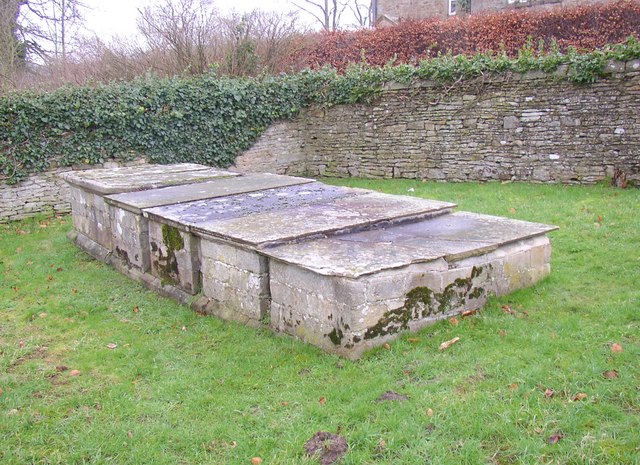
Of course not everyone found it easy to forswear a memorial for their loved ones and Quaker minute books record the ways in which different meetings dealt with the problem. For example in Norwich the first formal request for a gravestone was made in 1692, when 'the sense of the Meeting was wholly against it and that for the future, none be permitted to set up any'. However the minute goes on to say that Friends will endeavour to persuade those who have set up any to remove them. Some could not be persuaded, such as Anne Byars who set up a table tombstone for her husband's grave. There is a series of minutes from which it is clear that they tried several times, but each time had to report failure. Finally in the 1720s, there is reference to the fact that she now shares the same stone and this minute has a distinct note of resignation. There is at least one other example of a table tomb that I know of, at Farfield in Yorkshire.
Table tombs at Farfield

The question of whether or not to allow gravestones rumbled on until Yearly Meeting of 1850 which agreed that they were permissable so long as they were plain in design and contained only the name of the deceased, his or her age and the date of death. As burial grounds are under the care of each area meeting consistency is only asked for within each graveyard. Sometimes the stones are laid flat, sometimes upright and the lettering can be in a variety of configurations. 
Liverpool burial ground
Undercliff burial ground Bradford


A gravestone from Pales, Powys
I have spent a lot of time in Quaker graveyards up and down the country and I have always found them places of peace and contemplation in which I have felt close to my Quaker foremothers and forefathers. As William G Sewell put it in Quaker Faith & Practice 10.08 'The gravestones speak of the past, of those who also served the meeting, whose lives are woven into ours, as ours will affect those still to come.'

Tuesday, March 26, 2013

Quaker Alphabet Blog Week 12 - F for Friends House

Friends House front on Euston Road
Friends House garden
Friends House in Euston Road, London is the very imposing headquarters of Quakers in Britain. With a vast columned entrance facing Euston station and a more modest arched entrance facing a garden at one side it is familiar to generations of Quakers arriving for meetings or to visit the bookshop, cafe or restaurant. It is a busy hub for Friends from all over the country, as it houses the Library and the central offices of Britain Yearly Meeting, but also for a wide variety of other groups.

Liverpool Meeting House by Lidbetter
The building was designed by the Quaker architect Hubert Lidbetter (1885-1966). He was born in Dublin but educated in England and was just starting out in practice after spending the four years of the First World War in the Friends Ambulance Unit when he entered the competition to design a new home for Quakers in London in 1923. The project was finally finished in 1927 and he was awarded a bronze medal for his design by the Royal Institute of British Architects, which led to other commissions including new meeting houses at Birmingham Bull Street in 1933 and Liverpool in 1941.

Over the years the exterior has hardly changed but the interior has been refurbished and decorated in various ways. The simple lines of Lidbetter's original vision still remain and seem to me to combine a Quaker simplicity with a sense of scale. This is particularly the case in the main room, the Large Meeting House, where sessions of Yearly Meeting are held three years out of four. This room is about to undergo a transformation which will radically change its appearance and there are many, including myself, who look forward to the result with some trepidation.

1934 book by Elfrida Vipont
Many Friends who have visited the building regularly over the years as I have feel very much at home there. I have worked in the Library, both behind the desk and in the reading room, have sat on a variety of committees all over the building and have been coming regularly to Yearly Meeting since the 1970s. I therefore have a sense of being part of what goes on at 'the centre' when I am in my local meeting as well as when I am in Friends House.


Friends House has never been a stranger to controversy. Many have questioned the necessity for such a large building on such a valuable plot of land and have asked whether Quakers might be better moving to a different place or sending different parts of the administration to different places. No resolution has been found however and Friends House remains as good a centre for the Society of Friends in Britain as is possible at the moment and Lidbetter's building continues to make its presence felt on the Euston Road.
.