As I have found the discipline of following the alphabet through the year helpful I have decided to continue with it into 2015.
I'm intending to post alphabetically at the same rate as in 2014, once every two weeks or as near to that as I can manage. I want to continue my Quaker biographical posts, introducing some less well known Friends, but I will throw in some other alphabetic posts as before.
If I have other things to say I will slip them into my blog without the Quaker Alphabet heading.
I shall continue to put up links to my own and others' posts on the Facebook page for Quaker Alphabet Blog 2014 and beyond but I am also intending to use Twitter [@gilskidmore] more to spread the word.
I hope, dear reader, that you will find something to interest and engage you here in the coming year and I hope that you will tell me what you think.
Showing posts with label Quaker Alphabet. Show all posts
Saturday, January 24, 2015
Friday, February 21, 2014
Quaker Alphabet Blog 2014 - D for Duty
Duty sometimes has a bad press among Quakers today. It is seen as something cold and unfeeling and we are told that we should act instead out of love, should do what we want to do. If the Quaker community is to thrive then certain tasks have to be undertaken, but if doing our duty as elders, overseers, doorkeepers, providers of food and drink, even when those duties are difficult, is disparaged rather than encouraged, then Nominations Committees will continue having difficulty finding names.
For me duty is another word for commitment. My relationship with my widowed mother was often difficult but as her only child I felt a duty to try to look after her. In her last years I cooked a roast lunch for her every Sunday, often staying away from meeting to prepare a meal that I would seldom have cooked from choice. I played endless games of very competitive Scrabble with her and engaged in repetitive and often superficial conversation. I worried about her constantly. I did this because I loved her, but I continued doing it out of duty. Some days were better than others and in the end I felt that my love was returned and a real connection between us was made, but I would never have reached that position without the promptings of duty.
Although it does not use the word, the 10th section of Advices and Queries is also about duty. It advises us to 'Come regularly to meeting for worship even when you are angry, depressed, tired or spiritually cold.' Yearly Meeting in London in 1765 had the same message for Friends. 'Shall a cloudy sky, a little wet, a little cold, a little ease to the flesh, a view to a little earthly gain, or any common incident, furnish an excuse for declining this duty, and thereby depriving ourselves of the blessed advantage, often vouchsafed to the faithful, of enjoying heavenly communion together in spirit with the Lord of life and glory?' [Quaker Faith and Practice 2.43] It is true that not every meeting for worship we attend will leave us spiritually refreshed but duty and commitment will give us the opportunity to be there when it does.
Writing this blog is a commitment which sometimes feels like a very onerous duty but I am glad that I have duty to keep me going as well as enjoyment for myself and, I hope, for my readers.
For me duty is another word for commitment. My relationship with my widowed mother was often difficult but as her only child I felt a duty to try to look after her. In her last years I cooked a roast lunch for her every Sunday, often staying away from meeting to prepare a meal that I would seldom have cooked from choice. I played endless games of very competitive Scrabble with her and engaged in repetitive and often superficial conversation. I worried about her constantly. I did this because I loved her, but I continued doing it out of duty. Some days were better than others and in the end I felt that my love was returned and a real connection between us was made, but I would never have reached that position without the promptings of duty.
Although it does not use the word, the 10th section of Advices and Queries is also about duty. It advises us to 'Come regularly to meeting for worship even when you are angry, depressed, tired or spiritually cold.' Yearly Meeting in London in 1765 had the same message for Friends. 'Shall a cloudy sky, a little wet, a little cold, a little ease to the flesh, a view to a little earthly gain, or any common incident, furnish an excuse for declining this duty, and thereby depriving ourselves of the blessed advantage, often vouchsafed to the faithful, of enjoying heavenly communion together in spirit with the Lord of life and glory?' [Quaker Faith and Practice 2.43] It is true that not every meeting for worship we attend will leave us spiritually refreshed but duty and commitment will give us the opportunity to be there when it does.
Writing this blog is a commitment which sometimes feels like a very onerous duty but I am glad that I have duty to keep me going as well as enjoyment for myself and, I hope, for my readers.
Monday, April 29, 2013
Quaker Alphabet Blog Week 17 - I for Image
![]() |
| Q for Quaker by William Nicholson 1898 |
![]() |
| Present day Quaker Oats logo |
![]() |
| First image of 'Quaker Oats man' |
Of course one of the most iconic Quaker images, the Quaker Oats man, has absolutely no connection with the Religious Society of Friends. He was created to embody the perceived honesty and straightforwardness of Quakers and to associate these qualities with the products he advertised. The first image used is reminiscent of portraits of William Penn but the latest incarnation is jolly and smiling - not the older image of a Quaker at all.There are other examples of this advertising association, such as Quaker Maid motor oil which uses the image of a demure young girl in a Quaker cap to tell buyers that their product is pure.
Nowadays the image of a Quaker is often that of a campaigner for peace, equality or the environment. Quakers are seen as 'good people' if perhaps rather naive. I worry about the condescension of this view and would rather ally myself with the message of the recent outreach posters produced for Quaker Week in the UK - here are a wide range of people who are all Quakers whether they fit the Quaker image or not!Thursday, April 04, 2013
Quaker Alphabet Blog Week 14 - G for Gravestones
In the early days of Quakerism Friends were buried in separate Quaker graveyards in unmarked graves so that there should be no distinction between rich and poor.
Of course not everyone found it easy to forswear a memorial for their loved ones and Quaker minute books record the ways in which different meetings dealt with the problem. For example in Norwich the first formal request for a gravestone was made
in 1692, when 'the sense of the Meeting was wholly against it and that
for the future, none be permitted to set up any'. However the minute
goes on to say that Friends will endeavour to persuade those who have set up any to
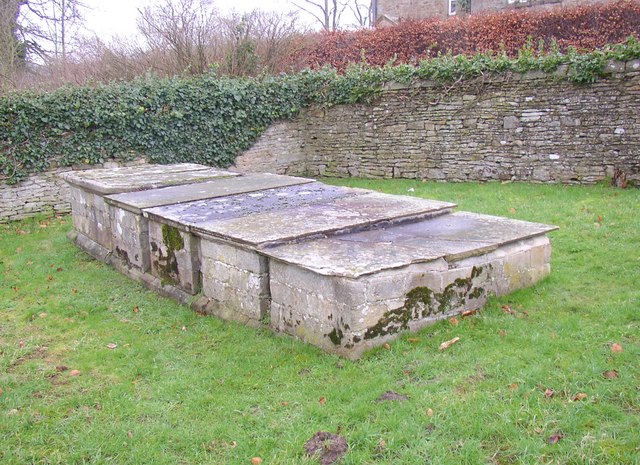
remove them. Some could not be persuaded, such as Anne Byars who set up a table tombstone for her husband's grave. There is a series
of minutes from which it is clear that they tried several times, but each time
had to report failure. Finally in the 1720s, there is reference to the fact
that she now shares the same stone and this minute has a distinct note of
resignation. There is at least one other example of a table tomb that I know of, at Farfield in Yorkshire.
The question of whether or not to allow gravestones rumbled on until Yearly Meeting of 1850 which agreed that they were permissable so long as they were plain in design and contained only the name of the deceased, his or her age and the date of death. As burial grounds are under the care of each area meeting consistency is only asked for within each graveyard. Sometimes the stones are laid flat, sometimes upright and the lettering can be in a variety of configurations.
I have spent a lot of time in Quaker graveyards up and down the country and I have always found them places of peace and contemplation in which I have felt close to my Quaker foremothers and forefathers. As William G Sewell put it in Quaker Faith & Practice 10.08 'The
gravestones speak of the past, of those who also served the meeting, whose
lives are woven into ours, as ours will affect those still to come.'
![]() |
| An early Quaker gravestone at Paddock, Huddersfield |
![]() |
| Table tombs at Farfield |
The question of whether or not to allow gravestones rumbled on until Yearly Meeting of 1850 which agreed that they were permissable so long as they were plain in design and contained only the name of the deceased, his or her age and the date of death. As burial grounds are under the care of each area meeting consistency is only asked for within each graveyard. Sometimes the stones are laid flat, sometimes upright and the lettering can be in a variety of configurations.
![]() |
| Liverpool burial ground |
![]() |
| Undercliff burial ground Bradford |
![]() |
| A gravestone from Pales, Powys |
Sunday, March 10, 2013
Quaker Alphabet Week 10 - E for Equality
Equality as a Quaker testimony derives from the conviction, as George Fox put it, that there is 'that of God in every one'. As with the other testimonies, to peace, truth and simplicity, equality is a work in progress which we do not always live up to either individually or corporately.
When I think of equality in a Quaker context what first comes to my mind is equality between women and men. It is often said that there has always been equality between men and women in the Society of Friends, but this is only a partial truth. While in general there has been spiritual equality, Quakers have often retained the temporal attitudes to the roles of the sexes that have been part of the world in which they lived and live. There are examples of this scattered through the biographies that I am writing as part of the Quaker Alphabet.
Back in the 1980s I was a member of the Quaker Womens Group and helped to write and present the QWG Swarthmore lecture Bringing the Invisible into the Light at Yearly Meeting in Exeter in 1986. The fact that Quakers had sometimes fallen short in their testimony to equality was one of our themes and we encountered a very hostile reaction from some quarters for daring to question an accepted truth.
There are other areas in which Quakers have not always managed, consciously or unconsciously, to be true to their testimony to equality. Friends in Britain have exhibited some racist attitudes as Lilamani Woolrych found when she was a Joseph Rowntree Quaker Fellow in 1993 and published in her report Communicating across cultures.
More recently Vanessa Julye and Donna McDaniel have looked at the record of American Quakers in this area in their 2011 book Fit for Freedom, not for Friendship and found it less than perfect. Although Quakers worked to right the wrongs of African Americans they were uncomfortable about living with them as equals or accepting them as full members of the Society of Friends. Black Friends were expected to take their place on the 'back benches' and had to fight for full acceptance as members.
In the same way lack of equality related to social class or educational differences was and perhaps still is an issue among Friends. When the Adult School movement was at its height among Quakers in the 19th and 20th centuries some of the working-class pupils wanted to be
come Friends but it was felt that they were not ready for full membership and a new category, associate membership was created for them. No doubt the Friends concerned thought they were being kind but
they were not accepting these people as equals.
I feel that it is important for Friends to recognise that we have failed to live up to our testimony to equality in the past and may be failing always to live up to this and other testimonies today. If we do not recognise this we run the risk of falling into the trap of self-righteousness. It is salutary to remember that Quakers are no more perfect than the rest of humanity and never have been.
When I think of equality in a Quaker context what first comes to my mind is equality between women and men. It is often said that there has always been equality between men and women in the Society of Friends, but this is only a partial truth. While in general there has been spiritual equality, Quakers have often retained the temporal attitudes to the roles of the sexes that have been part of the world in which they lived and live. There are examples of this scattered through the biographies that I am writing as part of the Quaker Alphabet.
Back in the 1980s I was a member of the Quaker Womens Group and helped to write and present the QWG Swarthmore lecture Bringing the Invisible into the Light at Yearly Meeting in Exeter in 1986. The fact that Quakers had sometimes fallen short in their testimony to equality was one of our themes and we encountered a very hostile reaction from some quarters for daring to question an accepted truth.
There are other areas in which Quakers have not always managed, consciously or unconsciously, to be true to their testimony to equality. Friends in Britain have exhibited some racist attitudes as Lilamani Woolrych found when she was a Joseph Rowntree Quaker Fellow in 1993 and published in her report Communicating across cultures.
More recently Vanessa Julye and Donna McDaniel have looked at the record of American Quakers in this area in their 2011 book Fit for Freedom, not for Friendship and found it less than perfect. Although Quakers worked to right the wrongs of African Americans they were uncomfortable about living with them as equals or accepting them as full members of the Society of Friends. Black Friends were expected to take their place on the 'back benches' and had to fight for full acceptance as members.
In the same way lack of equality related to social class or educational differences was and perhaps still is an issue among Friends. When the Adult School movement was at its height among Quakers in the 19th and 20th centuries some of the working-class pupils wanted to be
![]() |
| An application form for Quaker Associate Membership |
they were not accepting these people as equals.
I feel that it is important for Friends to recognise that we have failed to live up to our testimony to equality in the past and may be failing always to live up to this and other testimonies today. If we do not recognise this we run the risk of falling into the trap of self-righteousness. It is salutary to remember that Quakers are no more perfect than the rest of humanity and never have been.
Sunday, March 03, 2013
Quaker Alphabet Week 9 - E for Solomon Eccles
![]() |
| A consort of viols by Freyse, German, mid-17th century |
![]() |
| Title page of A Musick -Lector |
Like other Friends at this time Solomon was given to preaching not only by words but by acting out his message through 'signs'. In 1662 he sat in the pulpit of a church making shoes in order to show that it was not a special place. He was thrown out of the church but returned the next day, this time reaching the pulpit by jumping from pew to pew. After this startling demonstration he was, perhaps unsurprisingly, arrested and imprisoned.
Perhaps Solomon's most famous 'sign', reported by both Samuel Pepys and Daniel Defoe, was to walk naked or semi-naked with a pan of fire and brimstone balanced on his head, threatening passers-by with the fate of Sodom if they did not repent. Solomon began acting out this 'sign' in London in 1665 so that some saw it as a prophecy of the Great Fire, but he continued with it in 1667 in Scotland when he denounced the worshippers in a Catholic church and later in Cork, where he exhibited himself stark naked and was flogged through the town and expelled.
![]() |
| Solomon Eagle, 1843 (oil on canvas), Poole, Paul Falconer (1807-79) / Sheffield Galleries and Museums Trust |
Although his actions seem extreme Solomon was very clear that he was only acting as God commanded him and against his own will. In 1677 he wrote, 'I can truly say this, that I have strove much and besought the Lord that this going naked might be taken from me, before ever I went a sign at all.'
Solomon Eccles was not solely a person of extremes. George Fox trusted him and took him to the West Indies in 1671 where Solomon was very useful in organising Quakers in Barbados and Jamaica. In 1672 he went to New England but was arrested at Boston and banished. Solomon came back to England in 1680 and died in Spitalfields in London around January 1682 aged about 64. His three sons did not follow their father into Quakerism and all became musicians.
Solomon Eccles was much more than an eccentric but rather, as William Sewel who knew him well, said 'an extraordinary zealous man and what he judged evil he warmly opposed, even to the hazard of his life.' In the present day the story of Solomon Eccles has inspired the American Quaker Jon Watts to write a song about him.
Labels:
Barbados,
Cork,
Jamaica,
Jon Watts,
London,
music,
naked for a sign,
Quaker Alphabet,
Scotland,
shoemaker,
signs,
Solomon Eccles,
viols
Monday, February 25, 2013
Quaker Alphabet Week 8 - D for Discipline
![]() |
| Australian book of discipline |
![]() |
| Ireland book of discipline |
Each Yearly Meeting, and sometimes smaller groups such as Freedom Friends Church in Salem, Oregon, publishes their own book of discipline, also revised from time to time. Two of the most recent examples are from Australia Yearly Meeting, the fruit of a 10 year process, and Ireland Yearly Meeting whose Quaker Life and Practice has also been laboured over for many years. I find that reading these different books of discipline both historical and recent gives me a very good picture of the differences and similarities between the branches of worldwide Quakerism.
Although these compilations of Quaker practice have always been known collectively as books of discipline it is noticeable that modern editions do not generally include the word in their main title. What discomfort with the concept does this show? As the introduction to Quaker Faith and Practice says, 'Discipline is not now a popular word. It has overtones of enforcement and correction but its roots lie in ideas of learning and discipleship. Discipline in our yearly meeting consists for the most part of advice and counsel, the encouragement of self-questioning, of hearing each other in humility and love...'
For myself I certainly struggle with aspects of self-discipline in my Quaker life. Living in community, living simply and giving myself time to be open to the Light within are all things I find difficult. What keeps me going in the end is the corporate discipline of Friends.
Discipline in the way meetings for worship of all kinds are held is important to me. Ways change over time - in general we no longer kneel to pray in worship or stand when others minister in this way - but the discipline of waiting attentively for the Light, of waiting to be sure that the words that may come to us are to be shared with others rather than being for ourselves alone is still valid. The discipline of taking part in a meeting for worship for business, speaking only when called by the clerk, speaking only once on each topic, leaving time between contributions, upholding the clerk in the process of drafting and agreeing a minute - all this is vital.
Discipline in the Society of Friends is not easy but it is necessary. For me it is part of an active engagement with our endeavour, individually and corporately, to discern and act on the will of God.
Tuesday, February 12, 2013
Quaker Alphabet Week 6 C for Convincement
Descriptions of the way in which early Friends came to Quakerism identify several stages. First of all the individual is 'reached' by the message of Quakerism or by the behaviour and example of particular Quakers. Next comes the first part of convincement in which she or he is, to use an equivalent term, convicted - in the sense of a criminal conviction - that there is a darkness within, a failing that must be changed before convincement can proceed. This failing is different for everyone. Examples given in Friends' spiritual autobiographies include dancing, reading novels, drinking, putting too great an emphasis on one's own status and 'lightness' or insufficient seriousness. I think that my own failing, from which many others sprang, was a refusal to allow for the possibility of change.
![]() |
| Badge for UK Quaker Week 2012 |
In the past and sometimes even today a distinction has been made between 'birthright' Friends who have been born into Quaker families and 'convinced' Friends who have come to Quakers from outside, with convinced Friends often seen as somehow inferior. This is a false dichotomy as Friends have always recognised that even those brought up in Quaker families are still in need of convincement. Samuel Bownas was a case in point, carefully brought up to behave, dress and speak like a Quaker but unable to understand the heart of his faith until he too was convinced.
I am glad that convincement and becoming a Quaker is a continuing process. I am always heartened by the idea of 'measure' - that Light is given to each according to their capacity, or measure, and that if we live up to what is given then it is possible for that measure to increase.
Sunday, February 03, 2013
Quaker Alphabet Week 5 C for William Cookworthy
![]() |
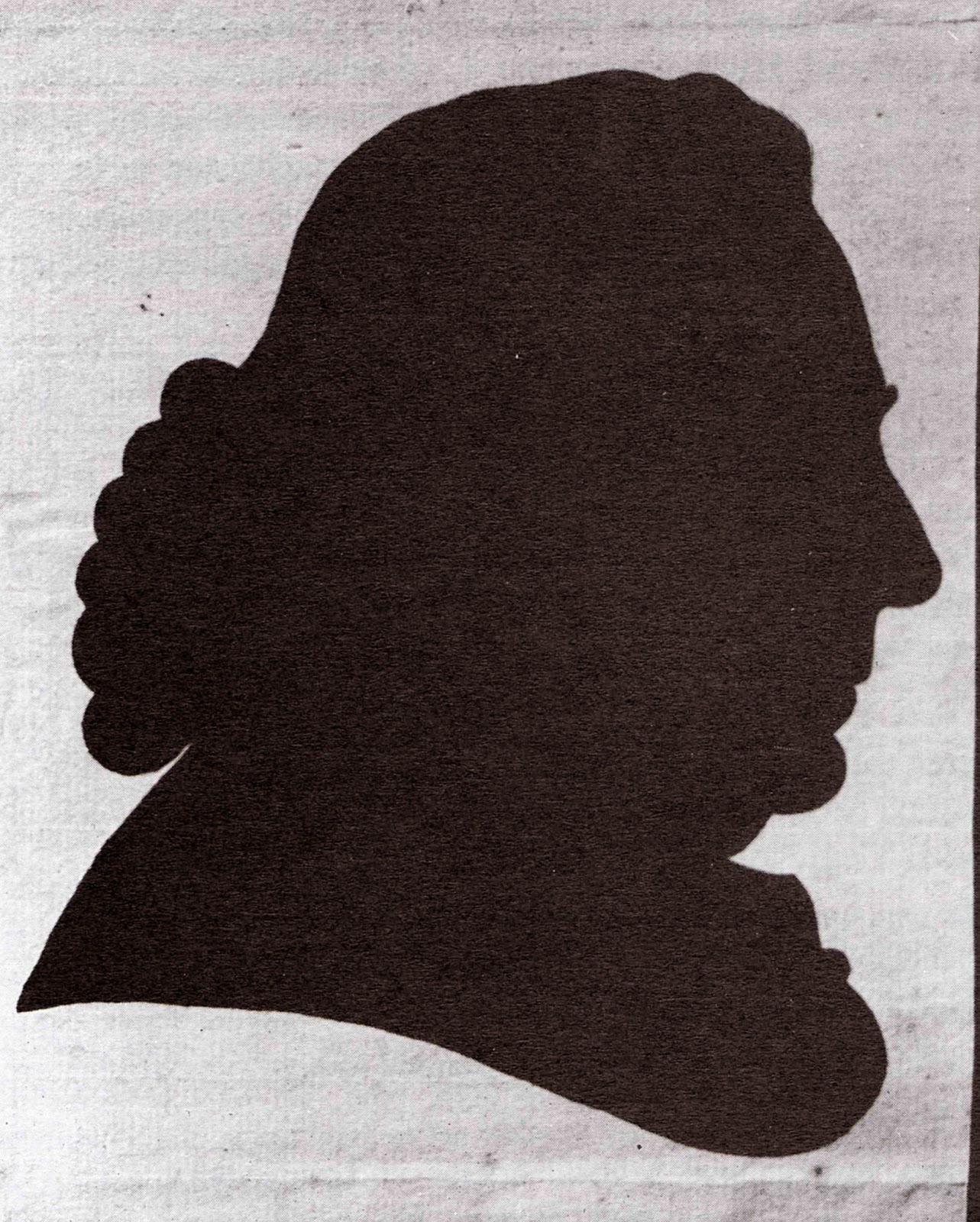
| Silhouette of William Cookworthy |
At this point Quaker networks came to William's rescue. Silvanus Bevan, a Quaker apothecary who was visiting Devon, heard of his predicament and took him back to London as his apprentice. William made the best use of his opportunity and in the next six years became a skilled pharmaceutical and mineralogical chemist. By voracious reading and self-education he also gained considerable knowledge of classical and English literature and enough Greek, Latin and French to allow him to converse in and later translate from these languages.
In 1726 Silvanus Bevan decided to start a wholesale pharmacy business in Notte Street, Plymouth and William came back to Devon to work there. By 1735 William had become a partner in the firm of Bevan & Cookworthy and in the same year he married Sarah Berry. They were very happy together and had a family of five daughters including twins when Sarah died of a stroke in 1745. William was overwhelmed with grief and suffered a breakdown, going off alone for several months and neglecting his family and business. His mother held things together and his brother Philip returned from sea and offered to work with him. Sylvanus Bevan signed over the business and the firm of Messrs William Cookworthy and Company was formed.
![]() |
| Smeaton's Eddystone lighthouse 1759 |
Perhaps William's most influential visitors however were the businessmen from Virginia who brought him samples of Virginian clay and porcelain in 1745. They wanted him to import Virginian clay and make porcelain in England but William decided that it would make better business sense if he could find comparable minerals nearer home. At this time English potters were only able to produce what was known as earthenware. The finer quality porcelain had to be imported from China, where the clay used was known as kaolin or china clay. In 1746 William discovered kaolin at Tregonning Hill in Germo Parish, Cornwall where it was known as moorstone or growan. He leased some clay pits and shipped the clay from Porthleven to Plymouth where he began experimenting on it.
![]() |
| Early mug with arms of Plymouth and mark |
In spite of all William's innovations the Plymouth factory failed to make a profit and amalgamated with a pottery in Bristol. William made his cousin, Richard Champion, the manager of William Cookworthy and Company and in 1774 sold the business and his patent to him. Champion continued to buy ingredients for the porcelain from Pitt and paid a royalty to William. When Richard Champion tried to renew Cookworthy’s patent in 1777, Josiah Wedgwood and other potters in Staffordshire raised objections. The patent formula was upheld, but the actual use of the china clay was released so that ceramic products could be made from it provided that the formula was not infringed. The cost of the legal battle crippled the Company and Richard sold the formula in 1782 to the New Hall Porcelain Company, which had been formed by the Staffordshire potters. They continued to produce porcelain until around 1810, when bone china became available.
![]() |
| Figures of the four continents produced at Cookworthy's Plymouth factory |
William Cookworthy's Quakerism was part of his life and important to him, but not a matter for solemnity. As one young contemporary put it "His manner of conveying the most important truths was so lively and interesting that young people, fond of hearing him talk, were often captivated by it; they were taught that religion was no gloomy uncomfortable thing, but that...every enjoyment of the present moment was heightened by it," He was also more open to other influences than many contemporary Friends, notably the thinking of the Swedish philosopher Swedenborg, some of whose books William translated from the Latin and had published.
Although famed for his absentmindedness, William was also capable of great concentration and indeed one may have been the product of the other. It was said of him that "He could carry on a lively conversation on his way to Meeting up to the very door and resume it on his way home, yet not allow a thought of it to pass through his mind while in Meeting."
William Cookworthy died in his family home in Plymouth in 1780 at the
age of 75. At the last he was comforted by a dream in which he saw his
long-lost and much lamented wife, his Sally, beckoning him to join her.
![]() |
| Portrait of William Cookworthy, c1780, by John Opie Plymouth City Museum and Art Gallery |
Thursday, January 17, 2013
Quaker Alphabet Week 3 - B for Samuel Bownas
Samuel Bownas is someone whose life and writings have always spoken to me. He was born into a Quaker family at Shap, Westmoreland in January 1677 and his father Anthony died within a month. Money was short and Samuel and his brother received only a basic education, enabling them to write and to read in English. Samuel had to earn money by working at a variety of jobs, including keeping sheep - which put him off the animals for life. At thirteen he was apprenticed to his uncle, a blacksmith, who mistreated him, and later to Samuel Parat, a Quaker of Sedbergh, Yorkshire.
Samuel's mother made sure that he was educated as a Quaker, but although he followed the traditional forms of dress, speech and worship they meant little to him. Going with his mother to visit Friends in prison he noticed that they wept during worship but could not understand why. All his mother could tell him was that perhaps as he grew he would understand.
When he was an apprentice Samuel went to Quaker meeting regularly but gained little benefit from it except that it kept him out of bad company. In his Journal he confessed that "the greater part of my time, I slept". However one day when Samuel was about twenty he was shaken from his lethargy by a visiting travelling minister, Anne Wilson. She pointed her finger at him and addressed him directly, rebuking him as "a traditional Quaker" who followed the outward forms of his faith but who came to and went from meeting untouched and unchanged.
This time Samuel was both touched and changed. He understood what his mother and other Friends had been trying to teach him 'experimentally' - through his own experience. Quite soon too he felt a call to the ministry which was recognised by his local meeting. While he was still apprenticed he did not venture far afield but after three years he began to travel widely, drawing on the experience and encouragement of many fellow-ministers including the older James Dickinson (1659-1741) and his contemporary James Wilson (1677-1769). They let him know if he was becoming too pleased with his ministry and urged him to be faithful. Another Friend, Joseph Baines, warned him against the snares of popularity saying, "Sammy, thou hast needs take care, Friends admire thee so much, thou dost not grow proud."
Travelling in the ministry was Samuel's main focus but in order to do this he felt it important that he should remain financially independent. He worked in the fields during the hay-harvest and at other enterprises so that he could save money for his keep and to buy his own horse so that he would not be a burden upon the Friends he travelled among.
On a visit to Sherborne in Dorset around 1701 Samuel met Joan Slade his future wife. The couple agreed to defer their marriage as Samuel felt called to travel further afield, to America. He travelled by way of Scotland and set sail for Maryland in 1702.
While in America Samuel was particularly engaged to challenge the preaching of the renegade Quaker George Keith, who had taken Anglican orders. Keith had Samuel prosecuted for preaching and thrown into gaol on Long Island, where he was held for nearly a year. Samuel learned to make shoes in order to earn a living and received visits from, among others, someone who he refers to as an 'Indian King'
After his release in 1703 Samuel continued his travels in America before returning home at the end of 1706. Early the next year he and Joan were married and settled in Lymington. Samuel continued to travel but encountered trouble at home when in 1712 he was gaoled for not paying tithes to the vicar of Lymington. Samuel was soon released as the vicar tricked Joan into paying the money in question, a fault which troubled her greatly until she died seven years later.
In 1722 Samuel married again, this time a widow named Nichols, and went to live with her in Bridport. The partnership lasted until she died in 1746 and Samuel used his wife's capital to set up in business, becoming a prosperous merchant. He also read widely and educated himself, becoming well known as a minister. He is described as "of a grave deportment, and of a tall comely and manly aspect" with a strong clear voice, preaching with "divine authority and majestic innocence."
As he had been encouraged by other ministers in his youth, Samuel came to feel that he had relevant experience to pass on to succeeding generations, so he wrote, and in 1750 published, A Description of the Qualifications Necessary to a Gospel Minister. These qualifications were not to do with academic learning but sprang from experience and from faithfully following one's Inward Teacher. This book was well received, has been reprinted many times and is still, I have found, worth reading today.
Towards the end of his life Samuel felt disillusioned with the Society of Friends as he saw it. He wrote to his old friend and fellow-minister James Wilson, "The Church seems very barren of young ministers to what it was in our youth, nor is there but very little convincement to what was then." Samuel saw convincement as the main point of his ministry and was disappointed by his reception. "'The man spoke well' say they, and that is all I get for my labours."
Samuel became increasingly infirm, "his hands shook and his eyesight failed him", but he continued to attend meetings locally until the end of his life. He died at Bridport on 2 April 1753 aged seventy six. After his death his Journal An account of the life, travels and Christian experiences in the work of the ministry of Samuel Bownas was published, which is also well worth reading today.
Samuel's mother made sure that he was educated as a Quaker, but although he followed the traditional forms of dress, speech and worship they meant little to him. Going with his mother to visit Friends in prison he noticed that they wept during worship but could not understand why. All his mother could tell him was that perhaps as he grew he would understand.
When he was an apprentice Samuel went to Quaker meeting regularly but gained little benefit from it except that it kept him out of bad company. In his Journal he confessed that "the greater part of my time, I slept". However one day when Samuel was about twenty he was shaken from his lethargy by a visiting travelling minister, Anne Wilson. She pointed her finger at him and addressed him directly, rebuking him as "a traditional Quaker" who followed the outward forms of his faith but who came to and went from meeting untouched and unchanged.
![]() |
| Briggflatts Quaker meeting near Sedbergh |
Travelling in the ministry was Samuel's main focus but in order to do this he felt it important that he should remain financially independent. He worked in the fields during the hay-harvest and at other enterprises so that he could save money for his keep and to buy his own horse so that he would not be a burden upon the Friends he travelled among.
On a visit to Sherborne in Dorset around 1701 Samuel met Joan Slade his future wife. The couple agreed to defer their marriage as Samuel felt called to travel further afield, to America. He travelled by way of Scotland and set sail for Maryland in 1702.
While in America Samuel was particularly engaged to challenge the preaching of the renegade Quaker George Keith, who had taken Anglican orders. Keith had Samuel prosecuted for preaching and thrown into gaol on Long Island, where he was held for nearly a year. Samuel learned to make shoes in order to earn a living and received visits from, among others, someone who he refers to as an 'Indian King'
![]() |
| St Thomas' church Lymington |
After his release in 1703 Samuel continued his travels in America before returning home at the end of 1706. Early the next year he and Joan were married and settled in Lymington. Samuel continued to travel but encountered trouble at home when in 1712 he was gaoled for not paying tithes to the vicar of Lymington. Samuel was soon released as the vicar tricked Joan into paying the money in question, a fault which troubled her greatly until she died seven years later.
In 1722 Samuel married again, this time a widow named Nichols, and went to live with her in Bridport. The partnership lasted until she died in 1746 and Samuel used his wife's capital to set up in business, becoming a prosperous merchant. He also read widely and educated himself, becoming well known as a minister. He is described as "of a grave deportment, and of a tall comely and manly aspect" with a strong clear voice, preaching with "divine authority and majestic innocence."
As he had been encouraged by other ministers in his youth, Samuel came to feel that he had relevant experience to pass on to succeeding generations, so he wrote, and in 1750 published, A Description of the Qualifications Necessary to a Gospel Minister. These qualifications were not to do with academic learning but sprang from experience and from faithfully following one's Inward Teacher. This book was well received, has been reprinted many times and is still, I have found, worth reading today.
Towards the end of his life Samuel felt disillusioned with the Society of Friends as he saw it. He wrote to his old friend and fellow-minister James Wilson, "The Church seems very barren of young ministers to what it was in our youth, nor is there but very little convincement to what was then." Samuel saw convincement as the main point of his ministry and was disappointed by his reception. "'The man spoke well' say they, and that is all I get for my labours."Samuel became increasingly infirm, "his hands shook and his eyesight failed him", but he continued to attend meetings locally until the end of his life. He died at Bridport on 2 April 1753 aged seventy six. After his death his Journal An account of the life, travels and Christian experiences in the work of the ministry of Samuel Bownas was published, which is also well worth reading today.
![]() |
| Title page of Bownas's journal |
Sunday, January 13, 2013
Quaker Alphabet Week 2 - A for Arts
![]() |
| The Presence in the Midst by J Doyle Penrose 1916 |
George Fox had a very definite 'puritan' view of the arts. To him these 'jests and toys' were nothing but a distraction from God and Truth and as such were to be entirely avoided by Friends. The only purpose of sports, games, poetry, plays and music as far as he and other early Quakers were concerned was to while away time that should be dedicated to a higher and more serious end. Another objection to the arts was that they were not true. Plays were particular offenders here as not only was the story being told not real but actors dressed up and pretended to be someone else!
Although poetry was allowed to sometimes have a serious purpose, composing it for any but a private audience was frowned upon. The works of Mary Southworth Mollineux (1651-1696) for example were only published after her death, although Fruits of Retirement: or Miscellaneous Poems, moral and divine did go into six editions in the course of the 18th century. Religious poetry was popular among Friends but was not often published, usually being privately circulated and copied into personal commonplace books and journals - which is how much of it survives.
![]() |
| Elizabeth Fry |
![]() |
| John Pemberton 1727-95 |
As time went on however a different attitude to the arts began gradually to spread among Friends. As with other changes in Quaker practice much evidence of this change comes from the attempts by official bodies to stop it! In 1846 for example London Yearly Meeting minuted "We believe [music] to be both in its acquisition and its practice, unfavorable to the health of the soul. . . . Serious is the waste of time of those who give themselves up to it." At about the same time the influential journal The Friend (Philadelphia) expounded "Sorrowful it is, that even some in conspicuous and influential stations, have actually "sat" for their portraits; and this, not for the hasty moment of the daguerreotypist (questionable as even this prevalent indulgence is), but patiently awaiting the slow business of the limner. Shallow indeed must be the religion of him who knows not that in himself, as a man, dwelleth no good thing."
On the other side some spoke up for the seriousness and spiritual value of the arts. In 1895 William Charles Braithwaite wrote "It needs to be recognized that our Society has not escaped the tendency to narrow down spiritual action to certain prescribed ways as a substitute for the reality of the spiritual life. For example, while Friends have been among the pioneers of modern science they have, until recent years, repressed all taste for the fine arts. These, at their greatest, always contain some revelation of the Spirit of God, which is in the fullest harmony with our spiritual faith. In the fields of music, art, and literature, as in others, Friends may witness to the glory of God and advance that glory by their service."
![]() |
| Penn's Treaty with the Indians by Benjamin West |
In the 1970s and 1980s British Quakers set up a Quaker Fellowship of the Arts and The Leaveners continue to encourage Friends to engage in both music making and theatrical performance. There are now many Quaker artists, both amateur and professional, expressing their faith through what they make and what they do.
![]() |
| Quaker Silence by John Perkin |
Subscribe to:
Posts (Atom)


,+%27Q+for+Quaker%27,+Lithograph,+1898..jpg)