Showing posts with label Cornwall. Show all posts

Monday, April 22, 2013

Quaker Alphabet Blog Week 16 - H for Lucy Violet Hodgkin Holdsworth


Violet's father Thomas Hodgkin
Lucy Violet Hodgkin came from a long line of Quaker ancestors. She was born in 1869 in Northumberland, the eldest of the six children of Thomas and Lucy Fox Hodgkin. Her father was a prominent Friend, co-founder of the Quaker bank of Hodgkin, Barnett, Pease and Spence, later amalgamated with Lloyds Bank, and an eminent historian. Lucy Violet was her father’s favourite and shared his love of literature. As she said later, 'He and I lived our real life in the book world.' By the age of ten she was reading his proofs and seemed much older than her brothers and sisters. Her sister Lily wrote, 'In one way Violet was like an only child, it was "Violet and the children" always.'


When she was eleven Violet had a bout of scarlet fever which left her with increasing deafness. Cures were sought but in vain and by 1895 she had no hearing at all. Although she had episodes of despair she learned to lip-read very well and spoke out clearly. Her whole manner was regal and this was accentuated by her commanding stature and by the large hats and long dresses that she always wore.

Violet with her parents in 1911
Violet was educated at home and remained there as a companion to her parents who were very protective of her. In 1894 her engagement to Malcolm Powell was broken off as a result of family pressure. They felt that someone who, although charming, was also mentally unstable was not the right husband for Violet, but she did not forget her first love. When, ten years later, he married someone else she noted in her diary, ‘Wednesday 11 May 1904, Malcolm’s wedding day and not mine.’

The Hodgkin family were wealthy and often travelled in Europe but in 1909 they undertook a longer voyage ‘under concern’ to Australia and New Zealand. In New Zealand they stayed with John Holdsworth and his wife Margaret at their house 'Swarthmoor'. Violet was deeply affected by her experience there of silent worship in an ecumenical atmosphere at meetings held at the Church in Havelock North by a group which included Friends, Theosophists and the Anglican minister.
The Holdsworth home Swarthmoor

Like many birthright Friends Violet felt that she had become involved in Quakerism without making a conscious choice and in New Zealand she found a setting for the more mystical spiritual expression that she was reaching for. When she returned to England she pursued this side of her faith and was eventually recorded as a minister in 1915. Throughout the years her ministry was marked by a catholic spirit and by directness, simplicity and depth. In 1919 she gave the Swarthmore lecture on Silent Worship; the way of wonder.

George Lloyd Hodgkin in 1911
In 1913 the Hodgkin family moved from Northumberland to Cornwall but very soon after they had done so Thomas Hodgkin died. Violet felt his loss very keenly, as she also did that of her favourite brother George who died of dysentery while engaged in relief work in Armenia in 1918. She found consolation in her work as a writer and began to publish historical and religious subjects. Her retelling of Quaker stories for young people A Book of Quaker Saints was published in 1917 and many other books and articles followed.

Writing was one way in which Violet could communicate and counter her deafness. Another way was through art. She was an avid watercolour painter, making opportunities everywhere she went to settle down to sketching, complete with umbrella, easel and stool. She would sometimes give ‘sketch shows’, displaying her paintings and talking about them.

In 1922 New Zealand came back into Violet’s life in the shape of John Holdsworth who was on a visit to England. His wife had died in 1920 and the friendship between him and Violet soon developed to the point where they decided to marry. He was 72 and she was 55 when the wedding took place in Cornwall. The couple went back to New Zealand but Violet was not used to running a household without servants and had to learn even how to boil and egg. She was made welcome by John’s daughter Beatrice but felt uncomfortable taking the place of John’s first wife in her own home. Eventually, after several voyages back and forth, John and Violet settled in England for good in 1928.

Illustration from A Book of Quaker Saints by F. Cayley-Robinson

Violet enjoyed the companionship of her husband and of her growing family of nieces and nephews. After John died in 1935 her quiet life continued, welcoming guests to her beautiful home near Falmouth and maintaining contact with a wide circle of Friends through a correspondence which grew year by year. She also continued writing into her eighties, meaning to ‘retire’ and then finding another subject to absorb her. One of her nephews remembers how important ‘the book world’ was still for her. 'Her drawing room was always full of new books including review copies. She would introduce you to them like guests at a party, with an affectionate pat for the good ones and a noise of disgust for bad ones.'

Lucy Violet Hodgkin Holdsworth led the life of the mind that her father had introduced her to, but also found affection and happiness when she had ceased to look for it. Her deafness closed some doors to her but opened others and she always welcomed new experiences and people into her life. She died in Cornwall in 1954 at the age of 85.

Sunday, February 03, 2013

Quaker Alphabet Week 5 C for William Cookworthy

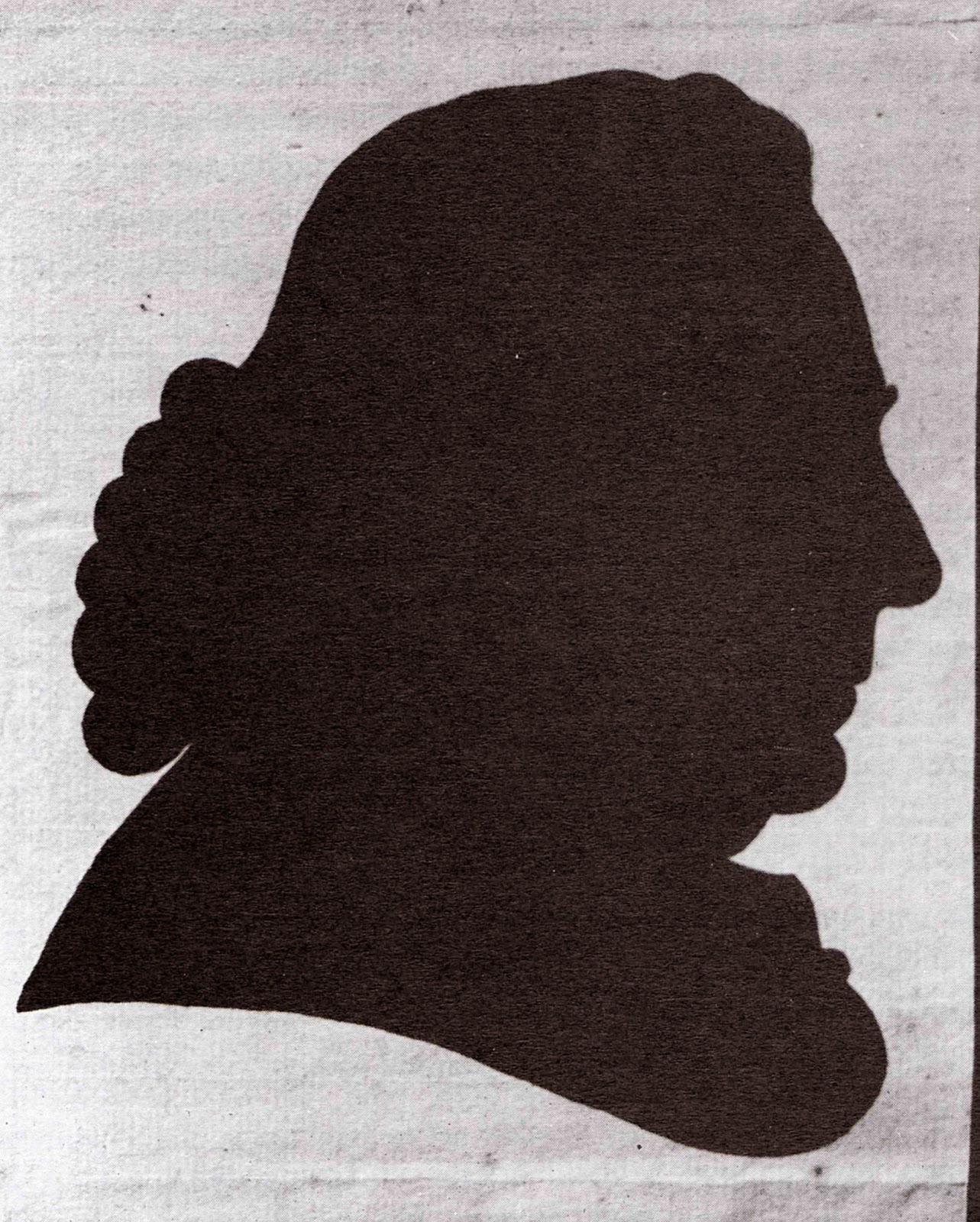
Silhouette of William Cookworthy
William Cookworthy was born into a Quaker family in Kingsbridge, Devon in 1705. His father was a prosperous weaver but died when William was fourteen and his mother then had to depend on charity to support him and his six younger siblings.

At this point Quaker networks came to William's rescue. Silvanus Bevan, a Quaker apothecary who was visiting Devon, heard of his predicament and took him back to London as his apprentice. William made the best use of his opportunity and in the next six years became a skilled pharmaceutical and mineralogical chemist. By voracious reading and self-education he also gained considerable knowledge of classical and English literature and enough Greek, Latin and French to allow him to converse in and later translate from these languages.

In 1726 Silvanus Bevan decided to start a wholesale pharmacy business in Notte Street, Plymouth and William came back to Devon to work there. By 1735 William had become a partner in the firm of Bevan & Cookworthy and in the same year he married Sarah Berry. They were very happy together and had a family of five daughters including twins when Sarah died of a stroke in 1745. William was overwhelmed with grief and suffered a breakdown, going off alone for several months and neglecting his family and business. His mother held things together and his brother Philip returned from sea and offered to work with him. Sylvanus Bevan signed over the business and the firm of Messrs William Cookworthy and Company was formed.

Smeaton's Eddystone lighthouse 1759
Eventually William and Philip bought a substantial house in the centre of Plymouth where they both lived, in separate establishments, and carried on their business. William's family was very important to him and he was an indulgent parent. He also entertained a great variety of visitors, including it is said Captain James Cook and Joseph Banks before they sailed in Endeavour to the South Seas in 1769, and was interested in a wide variety of subjects.William gave helpful advice to John Smeaton in planning and overseeing the building of the Eddystone lighthouse, took out a patent on a process to distill drinking water from sea-water and was also interested in astronomy and in the possibilities of finding water through dowsing.

Perhaps William's most influential visitors however were the businessmen from Virginia who brought him samples of Virginian clay and porcelain in 1745. They wanted him to import Virginian clay and make porcelain in England but William decided that it would make better business sense if he could find comparable minerals nearer home. At this time English potters were only able to produce what was known as earthenware. The finer quality porcelain had to be imported from China, where the clay used was known as kaolin or china clay. In 1746 William discovered kaolin at Tregonning Hill in Germo Parish, Cornwall where it was known as moorstone or growan. He leased some clay pits and shipped the clay from Porthleven to Plymouth where he began experimenting on it.

He found that the clay from Tregonning Hill contained dark specs of mica, which detracted from a top quality finished product. Better quality clay was found on land owned by Thomas Pitt near St Austell and William went into partnership with him to set up the Plymouth China Works. William took out a patent on the process in 1768 and the factory began to produce decorated tea services, jugs, vases and figurines. The earliest known extant piece of Cookworthy's hard-paste porcelain is now in the British Museum, a blue decorated mug bearing the arms of Plymouth and the inscription 14 March 1768 C.F. The initials probably stand for 'Cookworthy fecit (made it)'.

Early mug with arms of Plymouth and mark


In spite of all William's innovations the Plymouth factory failed to make a profit and amalgamated with a pottery in Bristol. William made his cousin, Richard Champion, the manager of William Cookworthy and Company and in 1774 sold the business and his patent to him. Champion continued to buy ingredients for the porcelain from Pitt and paid a royalty to William. When Richard Champion tried to renew Cookworthy’s patent in 1777, Josiah Wedgwood and other potters in Staffordshire raised objections. The patent formula was upheld, but the actual use of the china clay was released so that ceramic products could be made from it provided that the formula was not infringed. The cost of the legal battle crippled the Company and Richard sold the formula in 1782 to the New Hall Porcelain Company, which had been formed by the Staffordshire potters. They continued to produce porcelain until around 1810, when bone china became available.

Figures of the four continents produced at Cookworthy's Plymouth factory


William Cookworthy's Quakerism was part of his life and important to him, but not a matter for solemnity. As one young contemporary put it "His manner of conveying the most important truths was so lively and interesting that young people, fond of hearing him talk, were often captivated by it; they were taught that religion was no gloomy uncomfortable thing, but that...every enjoyment of the present moment was heightened by it," He was also more open to other influences than many contemporary Friends, notably the thinking of the Swedish philosopher Swedenborg, some of whose books William translated from the Latin and had published.

Although famed for his absentmindedness, William was also capable of great concentration and indeed one may have been the product of the other. It was said of him that "He could carry on a lively conversation on his way to Meeting up to the very door and resume it on his way home, yet not allow a thought of it to pass through his mind while in Meeting."

 William Cookworthy died in his family home in Plymouth in 1780 at the age of 75. At the last he was comforted by a dream in which he saw his long-lost and much lamented wife, his Sally, beckoning him to join her.

Portrait of William Cookworthy, c1780, by John Opie
 Plymouth City Museum and Art Gallery