Sunday, February 03, 2013

Quaker Alphabet Week 5 C for William Cookworthy

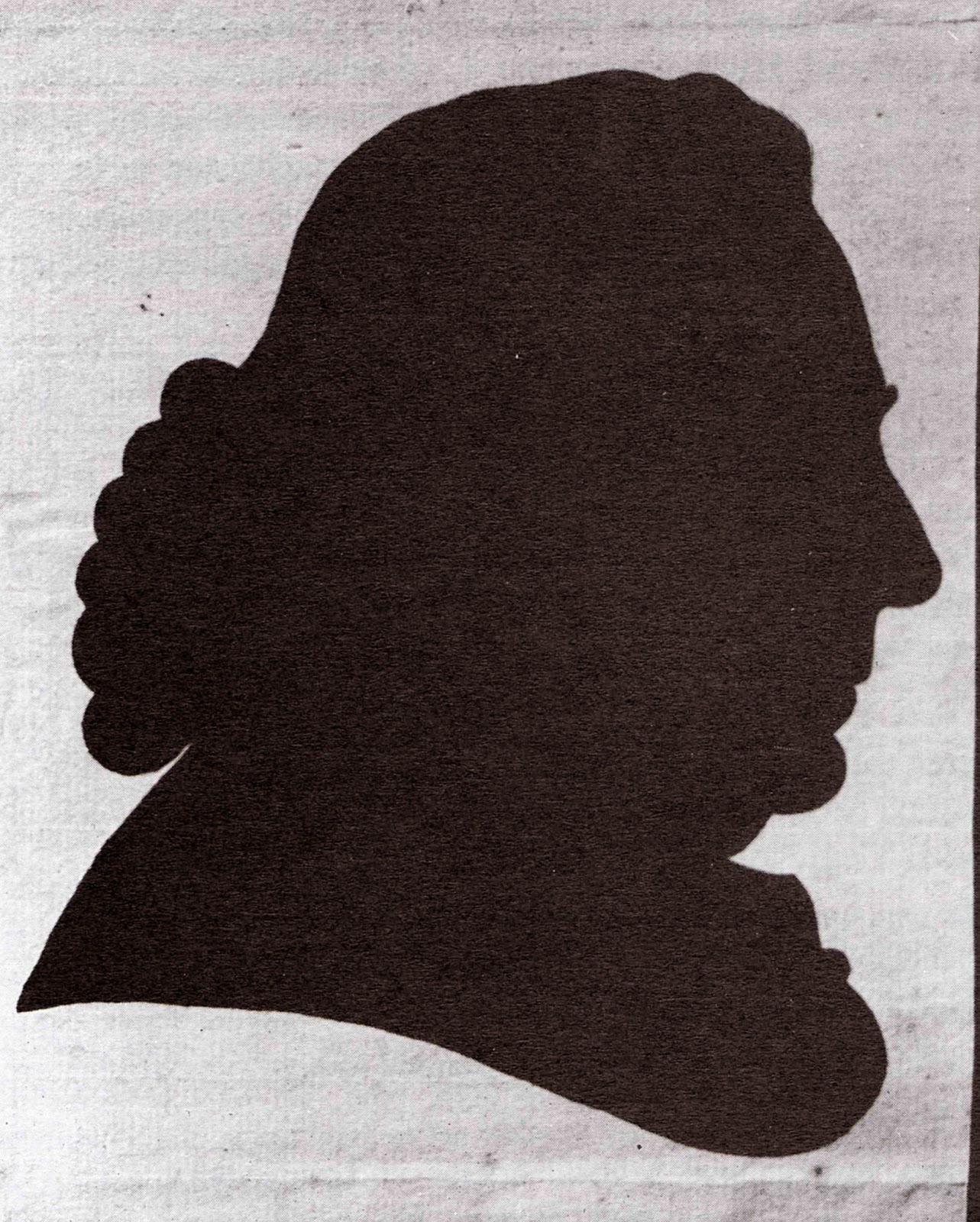
Silhouette of William Cookworthy
William Cookworthy was born into a Quaker family in Kingsbridge, Devon in 1705. His father was a prosperous weaver but died when William was fourteen and his mother then had to depend on charity to support him and his six younger siblings.

At this point Quaker networks came to William's rescue. Silvanus Bevan, a Quaker apothecary who was visiting Devon, heard of his predicament and took him back to London as his apprentice. William made the best use of his opportunity and in the next six years became a skilled pharmaceutical and mineralogical chemist. By voracious reading and self-education he also gained considerable knowledge of classical and English literature and enough Greek, Latin and French to allow him to converse in and later translate from these languages.

In 1726 Silvanus Bevan decided to start a wholesale pharmacy business in Notte Street, Plymouth and William came back to Devon to work there. By 1735 William had become a partner in the firm of Bevan & Cookworthy and in the same year he married Sarah Berry. They were very happy together and had a family of five daughters including twins when Sarah died of a stroke in 1745. William was overwhelmed with grief and suffered a breakdown, going off alone for several months and neglecting his family and business. His mother held things together and his brother Philip returned from sea and offered to work with him. Sylvanus Bevan signed over the business and the firm of Messrs William Cookworthy and Company was formed.

Smeaton's Eddystone lighthouse 1759
Eventually William and Philip bought a substantial house in the centre of Plymouth where they both lived, in separate establishments, and carried on their business. William's family was very important to him and he was an indulgent parent. He also entertained a great variety of visitors, including it is said Captain James Cook and Joseph Banks before they sailed in Endeavour to the South Seas in 1769, and was interested in a wide variety of subjects.William gave helpful advice to John Smeaton in planning and overseeing the building of the Eddystone lighthouse, took out a patent on a process to distill drinking water from sea-water and was also interested in astronomy and in the possibilities of finding water through dowsing.

Perhaps William's most influential visitors however were the businessmen from Virginia who brought him samples of Virginian clay and porcelain in 1745. They wanted him to import Virginian clay and make porcelain in England but William decided that it would make better business sense if he could find comparable minerals nearer home. At this time English potters were only able to produce what was known as earthenware. The finer quality porcelain had to be imported from China, where the clay used was known as kaolin or china clay. In 1746 William discovered kaolin at Tregonning Hill in Germo Parish, Cornwall where it was known as moorstone or growan. He leased some clay pits and shipped the clay from Porthleven to Plymouth where he began experimenting on it.

He found that the clay from Tregonning Hill contained dark specs of mica, which detracted from a top quality finished product. Better quality clay was found on land owned by Thomas Pitt near St Austell and William went into partnership with him to set up the Plymouth China Works. William took out a patent on the process in 1768 and the factory began to produce decorated tea services, jugs, vases and figurines. The earliest known extant piece of Cookworthy's hard-paste porcelain is now in the British Museum, a blue decorated mug bearing the arms of Plymouth and the inscription 14 March 1768 C.F. The initials probably stand for 'Cookworthy fecit (made it)'.

Early mug with arms of Plymouth and mark


In spite of all William's innovations the Plymouth factory failed to make a profit and amalgamated with a pottery in Bristol. William made his cousin, Richard Champion, the manager of William Cookworthy and Company and in 1774 sold the business and his patent to him. Champion continued to buy ingredients for the porcelain from Pitt and paid a royalty to William. When Richard Champion tried to renew Cookworthy’s patent in 1777, Josiah Wedgwood and other potters in Staffordshire raised objections. The patent formula was upheld, but the actual use of the china clay was released so that ceramic products could be made from it provided that the formula was not infringed. The cost of the legal battle crippled the Company and Richard sold the formula in 1782 to the New Hall Porcelain Company, which had been formed by the Staffordshire potters. They continued to produce porcelain until around 1810, when bone china became available.

Figures of the four continents produced at Cookworthy's Plymouth factory


William Cookworthy's Quakerism was part of his life and important to him, but not a matter for solemnity. As one young contemporary put it "His manner of conveying the most important truths was so lively and interesting that young people, fond of hearing him talk, were often captivated by it; they were taught that religion was no gloomy uncomfortable thing, but that...every enjoyment of the present moment was heightened by it," He was also more open to other influences than many contemporary Friends, notably the thinking of the Swedish philosopher Swedenborg, some of whose books William translated from the Latin and had published.

Although famed for his absentmindedness, William was also capable of great concentration and indeed one may have been the product of the other. It was said of him that "He could carry on a lively conversation on his way to Meeting up to the very door and resume it on his way home, yet not allow a thought of it to pass through his mind while in Meeting."

 William Cookworthy died in his family home in Plymouth in 1780 at the age of 75. At the last he was comforted by a dream in which he saw his long-lost and much lamented wife, his Sally, beckoning him to join her.

Portrait of William Cookworthy, c1780, by John Opie
 Plymouth City Museum and Art Gallery

Monday, January 28, 2013

Quaker Alphabet Week 4 - B for Books

Friends House Library
Although as I said under A for Arts, Quakers have often been hostile or ambivalent towards the arts in general, they have had a long history of writing and publishing books about Quakerism. 'Publishing Truth' was seen as an important way of reaching out to the world and telling others about what Quakers believed and stood for. Almost from the beginning Friends also collected writings both by Friends and against them - two copies of the pros and one copy of the antis - and these books and pamphlets formed the basis of the collection founded in 1673 and now housed at Friends House Library in London.

Not all these books were polemic.Writing about and sharing one's spiritual journey was also seen as important and even when these writings were not printed they were often copied and passed around among families and friends. Sometimes these spiritual autobiographies were published after the authors had died although they were sometimes heavily edited to take into account the changing sensibilities of later times.

From an alphabet by Paul Thurlby
 
Because Quakers were keenly aware of the power of books they wanted to make them widely available, sending out selections to local meetings and providing texts to be sold or given away to anyone interested in order to convince them of Quaker truths. But the Quaker establishment also wanted to control what was published and demanded that anyone who wrote a book about Quakerism had to submit it to the Second Days Morning Meeting (named for the day it met) for approval.

Texts might be edited, rewrites demanded and in some cases publication was denied. Even George Fox fell foul of this body when his Book of Miracles, with its stories of healings, was found too 'enthusiastic' for the times and rejected. Only the index survived from which Henry J Cadbury, in the early 20th century, attempted to reconstitute the original. The idea that Quaker writings had to be approved in order to be published by the Yearly Meeting has only fallen by the wayside in modern times when Yearly Meetings publish very little and any Friend can write a blog. Which is the better situation? Perhaps only time will tell.

Books have been an important part of my own journey to Quakerism. I first visited the Library as part of my Library School work experience and was struck by the warm welcome and good coffee that I received. Later I started a bibliographical MA on spiritual autobiography, which has remained a lifelong interest, and my reading included works by Quakers. Later still, when looking for a job, I remembered the coffee and the librarians and wrote on spec asking if there were any positions available. I got a job, loved it, and learned more about Quakers past and present through the books I read and the people I met. As with many others before me I found that although the writings were important in teaching me about Quakerism  it was the lives and struggles of the writers and their individual voices that spoke to me directly down the centuries. These were people that I got to know and this is the reason that I am including Quaker people as well as Quaker subjects in my alphabet so that others can find out something about the people behind the books. 

Thursday, January 17, 2013

Quaker Alphabet Week 3 - B for Samuel Bownas

Samuel Bownas is someone whose life and writings have always spoken to me. He was born into a Quaker family at Shap, Westmoreland in January 1677 and his father Anthony died within a month. Money was short and Samuel and his brother received only a basic education, enabling them to write and to read in English. Samuel had to earn money by working at a variety of jobs, including keeping sheep - which put him off the animals for life. At thirteen he was apprenticed to his uncle, a blacksmith, who mistreated him, and later to Samuel Parat, a Quaker of Sedbergh, Yorkshire.

Samuel's mother made sure that he was educated as a Quaker, but although he followed the traditional forms of dress, speech and worship they meant little to him. Going with his mother to visit Friends in prison he noticed that they wept during worship but could not understand why. All his mother could tell him was that perhaps as he grew he would understand.

When he was an apprentice Samuel went to Quaker meeting regularly but gained little benefit from it except that it kept him out of bad company. In his Journal he confessed that "the greater part of my time, I slept". However one day when Samuel was about twenty he was shaken from his lethargy by a visiting travelling minister, Anne Wilson. She pointed her finger at him and addressed him directly, rebuking him as "a traditional Quaker" who followed the outward forms of his faith but who came to and went from meeting untouched and unchanged.

Briggflatts Quaker meeting near Sedbergh
This time Samuel was both touched and changed. He understood what his mother and other Friends had been trying to teach him 'experimentally' - through his own experience. Quite soon too he felt a call to the ministry which was recognised by his local meeting. While he was still apprenticed he did not venture far afield but after three years he began to travel widely, drawing on the experience and encouragement of many fellow-ministers including the older James Dickinson (1659-1741) and his contemporary James Wilson (1677-1769). They let him know if he was becoming too pleased with his ministry and urged him to be faithful. Another Friend, Joseph Baines, warned him against the snares of popularity saying, "Sammy, thou hast needs take care, Friends admire thee so much, thou dost not grow proud."

Travelling in the ministry was Samuel's main focus but in order to do this he felt it important that he should remain financially independent. He worked in the fields during the hay-harvest and at other enterprises so that he could save money for his keep and to buy his own horse so that he would not be a burden upon the Friends he travelled among.

On a visit to Sherborne in Dorset around 1701 Samuel met Joan Slade his future wife. The couple agreed to defer their marriage as Samuel felt called to travel further afield, to America. He travelled by way of Scotland and set sail for Maryland in 1702.

While in America Samuel was particularly engaged to challenge the preaching of the renegade Quaker George Keith, who had taken Anglican orders. Keith had Samuel prosecuted for preaching and thrown into gaol on Long Island, where he was held for nearly a year. Samuel learned to make shoes in order to earn a living and received visits from, among others, someone who he refers to as an 'Indian King'
St Thomas' church Lymington

After his release in 1703 Samuel continued his travels in America before returning home at the end of 1706. Early the next year he and Joan were married and settled in Lymington. Samuel continued to travel but encountered trouble at home when in 1712 he was gaoled for not paying tithes to the vicar of Lymington. Samuel was soon released as the vicar tricked Joan into paying the money in question, a fault which troubled her greatly until she died seven years later.

In 1722 Samuel married again, this time a widow named Nichols, and went to live with her in Bridport. The partnership lasted until she died in 1746 and Samuel used his wife's capital to set up in business, becoming a prosperous merchant. He also read widely and educated himself, becoming well known as a minister. He is described as "of a grave deportment, and of a tall comely and manly aspect" with a strong clear voice, preaching with "divine authority and majestic innocence."

As he had been encouraged by other ministers in his youth, Samuel came to feel that he had relevant experience to pass on to succeeding generations, so he wrote, and in 1750 published, A Description of the Qualifications Necessary to a Gospel Minister. These qualifications were not to do with academic learning but sprang from experience and from faithfully following one's Inward Teacher. This book was well received, has been reprinted many times and is still, I have found, worth reading today.

Towards the end of his life Samuel felt disillusioned with the Society of Friends as he saw it. He wrote to his old friend and fellow-minister James Wilson, "The Church seems very barren of young ministers to what it was in our youth, nor is there but very little convincement to what was then." Samuel saw convincement as the main point of his ministry and was disappointed by his reception. "'The man spoke well' say they, and that is all I get for my labours."

Samuel became increasingly infirm, "his hands shook and his eyesight failed him", but he continued to attend meetings locally until the end of his life. He died at Bridport on 2 April 1753 aged seventy six. After his death his Journal An account of the life, travels and Christian experiences in the work of the ministry of Samuel Bownas was published, which is also well worth reading today.
Title page of Bownas's journal