Showing posts with label Norwich. Show all posts

Saturday, April 11, 2015

Quaker Alphabet Blog 2015 - G for Priscilla Hannah Gurney

Priscilla Hannah Gurney was born on 22 June 1757 in Norwich, the elder of the two daughters of Joseph Gurney, a merchant, and Christiana Barclay. Priscilla's father died when she was four, but when she was ten her mother married John Freame, her first cousin, and the family moved from Norfolk to Bush Hill, Enfield. A son was born but John Freame's poor health led him and his wife to leave their children with relatives and travel on the continent. In 1770 he died and the family moved again, this time to Bath, which Priscilla saw as a 'vortex of dissipation'. About two years later her mother married for a third time, to William Watson of Bath, a physician, scientist and non-Quaker. This was the second time that Priscilla's mother had married against the rules of the Society of Friends, marriage with first cousins and non-Quakers both being frowned upon. On both occasions she had escaped with a loving reprimand rather than disownment, but she was determined that her daughters should not offend in this way and kept a close eye on their suitors.
Company At Play from The Comforts of Bath by Rowlandson 1798

In 1775, when she was 18, Priscilla went on an extended visit to her Norfolk relations and while she was there refused a marriage proposal from a young Quaker. This visit also brought into focus the spiritual dilemmas she was facing. For several years afterwards she was torn between the influence of her Quaker relations and that of her worldly friends in Bath, one of whom was zealous in urging Priscilla to convert to the Church of England. Eventually Priscilla, wanting to please her friend, was baptized and attended church services but was still unsatisfied. Her Quaker relations talked and wrote to her and gave her Quaker books to read. She tried to blot out the inner voice she heard saying "I must be a Quaker" by going to balls, concerts and plays in Bath, but the mental anguish of her spiritual struggle made her ill.

Barclay's Apology title-page
At last Priscilla decided to read some Quaker books and found to her surprise that she agreed with everything in her ancestor Robert Barclay's Apology, a standard work of Quaker theology. She told her family that she was now a Quaker. Her mother asked Priscilla not to change her appearance and Priscilla tried to oblige but eventually felt compelled to dress and speak as a 'plain Friend'. She was still stuggling spiritually and felt more comfortable with other Quakers than with her family.

When Priscilla was 27 she turned down another proposal from a young Quaker to whom she had at first been attracted. He refused to accept her rejection, trying to hold her to an 'understanding' which she did not feel they had, and harassing her both personally and through his family and friends. This emotional pressure made her ill and she took to her bed where she was visited by several weighty Friends. Among them was Mary Davis of Minehead, who befriended Priscilla, introduced her to Richard Reynolds and his wife Rebecca and took her to visit them at their home in Coalbrookdale.

Dale House, Coalbrookdale
Mary and Priscilla planned to set up home together, and even after Mary's marriage to John Merryweather in 1788 they still pursued their intention. But Mary's death, after the birth of her second child in 1791, put paid to this and Priscilla made her home instead with the Reynolds, who she called her 'parental friends', at Dale House, Coalbrookdale. The close-knit Quaker circle of families at Coalbrookdale, enlivened by a constant stream of visitors, at last gave Priscilla a secure base in which she felt at home and to which she could contribute. She became a Quaker minister in 1792 and travelled both locally and as far afield as Scotland and the Scilly Isles.

Priscilla, described by a friend as 'small in person, beautiful in countenance, elegant in manner', was the ideal person for her young cousin Elizabeth Gurney (later Fry) to be sent to visit in 1798 when she too was going through a spiritual struggle. Priscilla acted as a calm and sympathetic influence and introduced Elizabeth to Deborah Darby, who prophesied her future service.

Mary Ann Schmmelpenninck
In 1804 Richard Reynolds, after the death of his wife, decided to leave Coalbrookdale for Bristol and Priscilla also moved away, back to Bath where her sister still lived. There she made a striking figure in her old-fashioned plain Quaker dress and black silk hood. Her friend Mary Ann Schimmelpenninck recalls, 'She had what is called a helmeted eyelid, and a beautiful and serenely arched eyebrow, which contributed to her devout and tranquil expression, beautifully formed nose indicated at once strength and acuteness of intelligence and great delicacy of taste'. For the rest of her life Priscilla, in increasingly delicate health, lived in Bath, sometimes travelling in the ministry, and cultivated her talent for friendship. She was 'constant, ardent and faithful in attachment, earnestly persevering in the endeavour to serve her friends'. Eventually confined to her house by an extreme susceptibility of the lungs, but still welcoming small groups of friends, she died in Bath on 17 November 1828 at the age of 71.

In spite of Priscilla's misgivings about publishing her spiritual autobiography Memoirs of the Life and Religious Experience of Priscilla Hannah Gurney edited by S. Allen was issued in 1834, only six years after her death. Much of its interest lies in what it tells us about the struggles of one brought up both among Friends and 'in the world'. Priscilla Hannah is referred to by both her names because there was a contemporary Priscilla Gurney who was also a minister.

Saturday, July 20, 2013

Quaker Alphabet Blog Week 29 - O for Amelia Opie

Octagon Unitarian Chapel, Norwich
Amelia Alderson was born in 1769 in Norwich, the only child of John Alderson, a successful doctor and Unitarian who attended the Octagon chapel in the city. When her mother died in 1784 Amelia was fifteen and took charge of her father's household. She entered enthusiastically into local society among other dissenter families such as the Martineaus and the Gurneys and was very popular. The good-looking and high-spirited girl sang ballads of her own composition, gave dramatic recitations and published poems.

Silhouette of Amelia in 1790s
Amelia's political interests were stimulated by the French Revolution and her father's interest in the Norwich reform movement. In September 1794 Amelia contributed fifteen poems to The Cabinet, a periodical begun by that movement. Also in 1794 Amelia visited London where she discovered the excitement of attending the law courts, the spectacle and drama of which remained a compelling interest throughout her life. She widened her acquaintance in theatrical and radical circles, meeting the Kembles, Mrs Siddons and Mary Wollstonecraft, whom she particularly admired. She declared that everything she saw for the first time disappointed her except for Mary Wollstonecraft and the Cumberland lakes!


Mary Wollstonecraft by John Opie
It was in London too that she met the self-taught Cornish artist John Opie who was eight years older than herself. After a brief courtship she became his second wife in 1798. To support their household John gave up his prestigious historical and mythological painting for the more lucrative portraiture. He was more conventional that Amelia and, coming from a working-class background, was not always comfortable with her love of society but he encouraged her to write. Her novel Father and Daughter, about misled virtue and family reconciliation, which appeared in 1801, was a great success and Sir Walter Scott himself was moved to tears by it. Encouraged by Mary Wollstonecraft, Amelia followed this in 1804 with Adeline Mowbray, an exploration of the relationship between a mother and daughter.

Amelia Opie painted by her husband
Unfortunately Amelia's life in London came to a tragic end when her husband died in 1807 aged forty six of a fever probably made worse by overwork. Having no children she returned to live in her father's house and participate in Norwich society. She continued with her writing but also renewed her early friendship with the wealthy Quaker Gurney family, especially with Joseph John Gurney, the leading evangelical Friend. Although nearly twenty years younger than Amelia, he was a great influence on her.

She began attending Quaker meetings in 1814 and gradually became convinced that here, rather than in the Unitarianism of her upbringing, was the vital religion that she sought. In 1820 her father fell ill and she nursed him until his death five years later. Throughout this time the Gurneys were a great support to them and Dr Alderson fully approved Amelia's application for membership which was accepted two months before his death, so much so that he was himself buried in the Quaker burial ground at Gildencroft.

There were certain changes that Amelia undertook when she became a Quaker at the age of fifty six. The chief of these was that she gave up novel writing and afterwards wrote only upon serious, factual and moral subjects. She also adopted the Quaker plain speech and plain dress, but with a style of her own. Emma Marshall remembers that her Quaker bonnet was small and perched somewhat coquettishly on her head, and the train of her silk gown made a 'swish' upon the matting as she came into meeting.

Amelia Opie in Quaker dress
Amelia now spent much of her time in works of charity. Influenced by her friend Joseph John Gurney's sister, Elizabeth Gurney Fry, she visited prisons, hospitals and workhouses. She also gave unobtrusive material assistance to her friends and especially to fellow writers such as Mary Russell Mitford. She was much concerned with the Bible Society and the Anti-slavery Society and in 1840 attended the Anti-slavery Convention in London.

Amelia was financially comfortable and able to travel widely, always delighting in the company of others from whatever level of society they came. She was an inveterate correspondent, often writing more than six letters a day. Every year she came to London to attend the Yearly Meeting. As she said in 1843, 'Yearly Meeting has engrossed me much as usual, for I never missed one sitting since I obtained the great privilege of belonging to it '. This record remained unbroken for nearly thirty years until ill-health prevented her attendance.

Amelia Opie's house on Castle Meadow, Norwich
Until almost the end of her life she retained her love of fun, her merry laugh and ready repartee. At the age of eighty-two, confined by rheumatism to a wheelchair, she visited the Great Exhibition and meeting there her friend Miss Berry, similarly transported, playfully proposed that they should have chair race. The last years of Amelia's life were spent in a house on Castle Meadow in Norwich on the corner of a small alley now known as Opie Street. She died at the age of 84 in December 1853 and was buried next to her father in Gildencroft.

Amelia Opie's life was full of contrasts and she sometimes appeared a rather worldly Friend, but coming to Quakerism at a later age she valued the Society highly and tried her best to live up to its standards. Perhaps her friend the poet Robert Southey put it best when he said that she embraced Quakerism 'not losing in the change her warmth of heart and cheerfulness of spirit, nor gaining by it any increase of sincerity and frankness, for with these nature had endued her and society, even of the great, had not corrupted them.'

Thursday, April 04, 2013

Quaker Alphabet Blog Week 14 - G for Gravestones

In the early days of Quakerism Friends were buried in separate Quaker graveyards in unmarked graves so that there should be no distinction between rich and poor.

An early Quaker gravestone at Paddock, Huddersfield
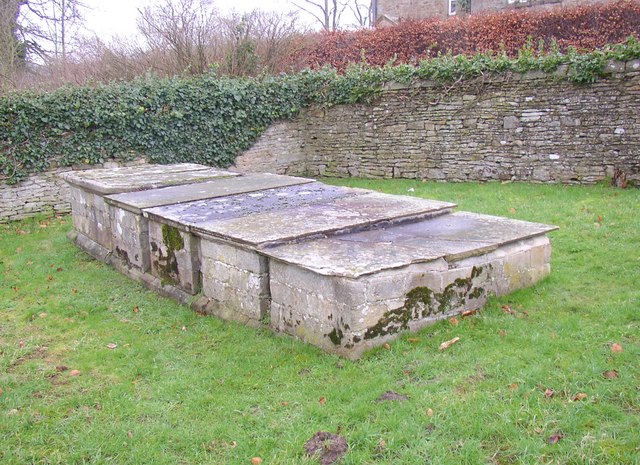
Of course not everyone found it easy to forswear a memorial for their loved ones and Quaker minute books record the ways in which different meetings dealt with the problem. For example in Norwich the first formal request for a gravestone was made in 1692, when 'the sense of the Meeting was wholly against it and that for the future, none be permitted to set up any'. However the minute goes on to say that Friends will endeavour to persuade those who have set up any to remove them. Some could not be persuaded, such as Anne Byars who set up a table tombstone for her husband's grave. There is a series of minutes from which it is clear that they tried several times, but each time had to report failure. Finally in the 1720s, there is reference to the fact that she now shares the same stone and this minute has a distinct note of resignation. There is at least one other example of a table tomb that I know of, at Farfield in Yorkshire.
Table tombs at Farfield

The question of whether or not to allow gravestones rumbled on until Yearly Meeting of 1850 which agreed that they were permissable so long as they were plain in design and contained only the name of the deceased, his or her age and the date of death. As burial grounds are under the care of each area meeting consistency is only asked for within each graveyard. Sometimes the stones are laid flat, sometimes upright and the lettering can be in a variety of configurations. 
Liverpool burial ground
Undercliff burial ground Bradford


A gravestone from Pales, Powys
I have spent a lot of time in Quaker graveyards up and down the country and I have always found them places of peace and contemplation in which I have felt close to my Quaker foremothers and forefathers. As William G Sewell put it in Quaker Faith & Practice 10.08 'The gravestones speak of the past, of those who also served the meeting, whose lives are woven into ours, as ours will affect those still to come.'