Showing posts with label Bradford. Show all posts

Monday, March 18, 2019

Barbara Wheeler Hoyland


Barbara Wheeler was born in London in 1764, the fourth child and first daughter of William Wheeler who, although brought up as a gentleman, did not possess ‘a fortune fully adequate to his taste and refinement’ and found himself pushed by the needs of a growing family to take up business and become a wine merchant.

A dancing class
Her parents conformed strictly to the established Church but also to the demands of genteel society. As Barbara apologetically notes in her memoir, 'it was thought proper for us to learn music and dancing, and games at cards, and we were introduced to plays also, and trained for the ballroom and card tables.' She worshipped her father, tried to excel in everything for his sake, and would do anything to win his approval. To please him she attended a dancing school but later felt that the unthinking and trivial company she encountered there was a very bad influence on her, especially when she found herself lying to her father about where she had been and what she had been doing.

John Fothergill by American artist Gilbert Stuart
In 1778, when Barbara was fourteen, her father became ill and was looked after by the Quaker doctor John Fothergill who made a great impression on both him and his daughter. Barbara describes how the doctor's 'gentle, though firm demeanour calmed sorrow into silence. His penetrating eye and abstracted thought always inspired confidence in his judgement, though there might appear not the least prospect of success'. In the end the doctor could not save his patient and her father's death was a very great blow to Barbara. She tried to be a support to her mother, but carrying on the business proved to be a worry, as William, the eldest son, who should have been in charge of it, was only interested in following his own pleasures – wine, women and gambling.

After six years of struggling to carry on the business, Barbara's mother also died. The business was disposed of and the family dispersed, the three sons to foreign parts, one daughter to school and Barbara to live with her guardian, a clergyman cousin living in Yorkshire. It was here that she met her future husband while visiting relations in Handsworth Woodhouse, just outside Sheffield. Barbara's description of their meeting is reminiscent of a Jane Austen novel. 

‘The Parish church was more than a mile from the village where my cousins resided, yet we were pretty regular in our attendance. Once on going thither we were suddenly overtaken by a thunderstorm, when about half way, near a neat mansion very beautifully situated. This place had been taken by a person from Sheffield, who was in a precarious state of health, and a Quaker. The pathway went across the field in front of the house, and we, for a minute, debated whether we should ask shelter, especially as he was a single man. The propriety of the thing was, however, soon put out of the question, as the rain began to descend in torrents, with loud claps of thunder. We ran with all possible expedition to the asylum, the door of which was opened for our reception before we reached it. Part of our finery was pretty well drenched, and took some time to put in order again. The novelty of being in the house of a Quaker, and the idea of formality which attached to the person, were soon dissipated by the easy kindness and genuine promptness to render assistance that were offered by the master of the house. We were all pleased with our visit, and after the rain abated and the sky began to clear, we returned home, it being past church time.’

William Hoyland soon returned the visit in a more formal manner and began to improve his acquaintance with Barbara, to the point where marriage was proposed. Barbara’s relatives had several objections to the match, of which their difference in religion was only one. William was also about fifteen years older than her, of a serious temperament and suffered from poor health which might mean that Barbara would be more of a nurse than a wife. Barbara wavered, but ‘affectionate attachment’ and the renewed attentions of a former suitor made up her mind and the couple were married by Barbara’s cousin in 1787. This marriage before a priest led inevitably to William’s disownment from the Society of Friends which meant that he could no longer attend meetings for business.

The happy couple set up home in Woodhouse and Barbara found herself ‘mistress of an establishment, not indeed abounding with the embellishments of modern style or splendid convenience, but with all the pleasure of a happy and chaste simplicity.’ They took their place in Woodhouse village society but every Sunday the division between them in the matter of religion made itself evident. They walked together to the bottom of their garden and then parted, she to go to the Parish Church and he to the Meeting House. This was, as Barbara puts it, ‘a circumstance which was always accompanied by regret, but entirely without verbal remark on either side.’
St Mary's parish church, Handsworth Woodhouse.

After three years, during which ‘life seemed to flow in an easy channel’ William had to go to Sheffield for a week on business and suggested that Barbara accompany him. She had lost two children and was expecting a third so that her visiting would be confined to William’s relations, whose ‘plain’ Quaker lifestyle she found rather intimidating. However, rather than stay at home alone, she chose to go with him.


When Sunday came she says, ‘I felt a little uncomfortable in the morning, not knowing how I should get to church, but upon considering the matter, as I had often had a curiosity to sit in a meeting of friends, I thought if any of the family should invite me to go with them, I would do so.’ This happened and she accepted but her husband appeared uneasy and, making no comment, immediately rode off back to the meeting in Woodhouse so that Barbara went to Sheffield meeting without him.

The new experience was very strange to Barbara. As she put it, 'Profound silence soon reigned over a large assembly of people, most of whom were dressed decidedly like Friends; which appeared a pretty, or at least a novel, sight; but what were they doing? Sitting in an almost motionless state without appearing to notice anything. Some, whose faces I could not see, I fancied were asleep or near it. I looked on every side, and such was the stillness and settlement, that the motion of my head seemed to make a disturbing noise. I tried to sit as quietly as I could, withdrew my eyes from observation, and my thoughts involuntarily turned on my own situation and the possibility that I might not live through my confinement and on the lot of the helpless infant if it survived...These considerations were, however soon succeeded by a perfect calmness, which so much pervaded my whole mind, that I believed I could die, or bear anything that might befall me, if it were the will of God, let it be ever so sad.’ She was moved to tears and when a Friend then prayed she says, ‘it was all I had felt, all I had desired in silence, put into the most striking figures of speech and was a seal of confirmation to me of spiritual worship, indelibly fixed on my mind.’

Barbara and her husband did not speak at all of what had happened although she felt that she had his sympathy. About two years later, in 1792, she applied for membership of the Society, again without discussing it with William. However, she says 'he was told by some Friend that the application had been made, and the next time we met, he appeared very thoughtful, and I was ready to suspect the matter had been disclosed and that it was not agreeable to him. But on questioning him on the subject he very feelingly said, "No, my dear, I am glad that what I have lost thou art about I hope to gain."'.

Gracechurch St Meeting House, London in 1770. Sheffield meeting house would have been similarly arranged.
They went on their separate ways and on being accepted into membership Barbara took up her duties as a Quaker. She says, ‘The first Monthly Meeting I sat happened to be at Sheffield; and I was not a little surprised to find that my dear W.H. meant to attend the previous meeting for worship. I felt a good deal for him as it was the first he had attended at Sheffield since we had been married, and I looked earnestly about, when assembled, but could not perceive him. In about an hour after the commencement of the meeting, every interesting feeling was awakened by the sound of his voice, and seeing him stand up near the centre of the meeting and acknowledging "he had wandered from the principles in which he had been educated, and the justice of the dealings of Friends towards him", concluding with a request to be reinstated.’ William was eventually readmitted and in this way was  able to repent of his failings without regretting his marriage. He was extremely scrupulous in never blaming Barbara for his misfortune or indeed ever discussing the principles of Quakerism with her, but stood back while she came to convincement in her own way at her own pace. Disownment was inevitable when they married but he was never cast off from family or from worship and the possibility of return.

Barbara and William were now both part of the Quaker community and Barbara was recognised as a minister. Their family grew, although several of their twelve children died young. After being out of touch for some years Barbara also renewed contact with her sister and brothers including the youngest, Daniel, seven years her junior, who had been in both the navy and the army. In 1796 he wrote to Barbara asking for permission in visit her but made no formal arrangement. 

However one evening there was a knock at the door and 'a military figure presented itself, wrapped in a long cloak. He hastily enquired if Mr H. was at home. With too much perturbation to answer the question, I replied by asking what he wanted with him. “Oh. Mrs H. will do for me,” he said, in a more softened tone of voice, and entering with a light step into the parlour, he looked alternately at us, then, bowing, greeted my husband familiarly, who rose at the salutation and expressed his want of knowledge of the person; but by a steady look towards him, I caught one remembered glance of the dear orphan Daniel. The name passed my lips on the moment of recognition, and he threw his arms about my neck.The youth of fourteen was so lost in the man of twenty-four, characterised with the toute ensemble of the soldier, that scarcely any trace remained but the quickness and brilliancy of his eye.'

Daniel stayed with Barbara and William and eventually the unspoken influence of Quakerism worked on him too and he joined the Society as his sister had. He took to farming, married and took his place as a Quaker minister, becoming well known, not only for his faith, but for his adventures in Russia and elsewhere.
Quaker Tapestry panel about Daniel Wheeler's adventures

In 1797 Barbara and William moved into the centre of Sheffield where William set up an ironmongery business in partnership with his younger brother. Unfortunately his health did not improve and in 1805 he died at the age of 55. A few years later Barbara moved with her family to Bradford, another thriving Quaker community, and was active as a minister both locally and farther afield. She held numerous public meetings, for example, in Leeds in 1822, in Knaresborough and Thirsk Monthly Meetings in 1825 and in Halifax in 1827. She also travelled to Devon and Cornwall with a younger minister, Benjamin Seebohm, in 1824.

.
Towards the end of her life Barbara wrote an account of her spiritual journey mainly for her family. The manuscript (together with a transcript) is in Friends House Library, London and I have quoted from it extensively in this post. Barbara died in Bradford in 1829 at the age of 65 and was buried in the Quaker burial ground there. In 1855 the burial ground was closed by the town council and the bodies, including Barbara's, removed to the new Undercliffe cemetery overlooking the town.
Quaker graves inUndercliffe cemetery, Bradford

Thursday, July 20, 2017

Quaker Alphabet Blog 2015-2017 - Y for Yearly Meeting Gathering

Back in 2013 I wrote a post about my experience of Yearly Meeting and as I said then I have been a regular attender for many years.

London (later Britain) Yearly Meeting has usually been held in London but in modern times there have been moves to change this. In 1905 London Yearly Meeting was held in Leeds and there were other occasional forays out of the capital - to Birmingham in 1908, Manchester in 1912 and 1926, Llandrindod Wells in 1924, Scarborough in 1925, Bristol in 1937, York in 1941 and 1942 and Edinburgh in 1948.

Younger son at YM 1986
It was intended that Yearly Meeting should be held in the summer every four years outside London and a minute was made to that effect in 1945. However the organisation of these 'Residential Yearly Meetings' took a while and the first was not held until 1986 in Exeter. I was there as part of the Quaker Women's Group presenting the Swarthmore Lecture and my family came too. In fact the children enjoyed themselves so much that they insisted that we should make it a family tradition. So we continued to go not only to Yearly Meetings in London but to residentials in Aberdeen in 1989, in Warwick in 1993, in Aberystwyth in 1997, in Exeter in 2001 and in York in 2005.


Author and younger son at Aberdeen YM 1989
From 1991 it was decided to hold Summer Gatherings between Residential Yearly Meetings. These were to be predominantly social affairs with no decision-making agenda. The Yearly Meeting in these years was still held in May in London. We did not go to the first Summer Gathering in Bradford but did attend those held in Lancaster in 1995, Canterbury in 1999, Loughborough in 2003 and Stirling in 2007.

Eventually however the organisational and financial burden of these different gatherings became too much, especially in the years when both Yearly Meeting and Summer Gathering were held. The decision was therefore made to amalgamate Residential Yearly Meeting and Summer Gathering into Yearly Meeting Gathering with YM sessions and social activities being thrown together and particpants being able to make their own agenda.

Epilogue at Yearly Meeting Gathering in Bath 2014

The first Yearly Meeting Gathering was held in York in 2009, followed by Canterbury in 2011 and Bath in 2014. This year YMG will be at the University of Warwick and I will be there.

Any longer residential gathering is bound to be an intense experience, sometimes almost overwhelming, and I have sometimes found it difficult, needing to carve out spaces of solitude and calm for myself. But there have been many happy and uplifting times as well as difficult ones and I have always been glad that I have gone.

Saturday, February 11, 2017

Quaker Alphabet Blog 2015-2017 - U for Undercliffe

Undercliffe House was the home of John and Christiana Hustler of Bradford and their family. John was born in 1715 to Quaker parents in Bolton. His father was a farmer but also a wool merchant and John served an apprenticeship as a woolsorter and stapler. The family business flourished during the 1740s and John was very active as a merchant in Bradford, dealing not only in wool and worsted cloth but in coal, some from his own mines. He became very prosperous and lived at Bolton Hall, part of whose grounds became what is now Peel Park.

In 1763, when he was 48 years old and well established, John married Christiana Hird, aged 31, a minister and the daughter of another prosperous Quaker. They moved into Undercliffe House which John had built in a healthier situation than Bolton Hall, further up the hill above the city. It was a large establishment and Christiana made it a home for their six children and a place of hospitality for many visiting Quaker travelling ministers.

John was very influential in transforming Bradford into a modern city. He was a prime mover in opening out Bradford centre, building the Piece Hall and suggesting the construction of New (now Market) Street. In modern times his contribution was recognised by naming a street, Hustlergate, after him. He was also a leading promoter of the Leeds and Liverpool and later the Bradford canals, known at that time as 'the navigation'.

This business often took him to London where, according to one fellow visitor to Dr Fothergill's house, he could talk of nothing else. Betsy Fothergill confided to her diary '[we were] entertained in the manner I expected - the course of rivers, the situation of hills, etc etc - and in short, "the Navigation" spun out into its different branches, was the continued subject. It is a common maxim that extremes can never last but J Hustler is an exception to this general rule, for he has continued the pursuit of this favourite scheme for near two years past, with an ardour that rather strengthens than declines.'

Joseph Wood
While John travelled on business Christiana remained at Undercliffe and dispensed generous hospitality to Quaker  visitors. Joseph Wood came to stay the night in 1774 and says 'John was gone from home but his Wife was remarkable, open, free, so that we spent the evening very agreeably together, and she having just received a Letter from her brother Benjamin Hird who was then on a religious visit to friends in Scotland was so kind as to read it to me which was very comfortable...' 

As her children grew Christiana felt free to travel in the ministry not only locally but further afield. In the 1780s Christiana accompanied Rebecca Jones on her travels around the country but they often returned to Undercliffe for periods of rest and recuperation. In 1788 on her return to America Rebecca fondly remembered 'that hospitable retreat called Undercliffe, where I have been often received, kindly cared for and tenderly treated, far beyond my deserts.'

John died in 1790 and Christiana in 1811 and they were both buried in the Quaker burial ground in the city centre. Undercliffe passed to their sons but eventually the house was demolished and the estate sold. In 1851, as part of a national campaign to remove graveyards from city centres where they were becoming a health hazard, 26 acres of the estate were acquired by the Bradford Cemetery Company and Undercliffe Cemetery was established.
Removals stone showing John and Christiana Hustler
 The cemetery was divided between anglicans and non-conformists and was run as a commercial enterprise. The first interment took place in 1854 and then in 1855 an Order in Council closed many of the overcrowded central burial grounds, including the old Quaker graveyard. The Society of Friends purchased a small section at the back of the newly opened cemetery and re-interred the disturbed remains, including those of John and Christiana Hustler, in one large grave. This and subsequent graves were marked with uniform stones laid flat on the ground, a contrast to the many lofty and elaborate monuments surrounding them.

Undercliffe cemetery


Tuesday, October 01, 2013

Quaker Alphabet Blog Week 39 - T for Esther Maud Tuke

Silhouette of Esther Maud Tuke
Esther Maud was born in 1727 in Westscholes near Halifax, the eldest daughter of the five children of Timothy and Ann Maud. Esther's father was a respectable Friend who worked making plush (a kind of velvet) in Bingley. However his eldest son Joseph was a wastrel whose debts led to the financial ruin of his family. Joseph eventually disappeared to America but the third son, William, showed signs of the same profligate tendencies, and his father was so worried by this that his health broke down and he died in 1752 leaving the family penniless.

On his death bed her father urged Esther to try to resolve the family's problems, and though often in despair she bravely took on this responsibility. Esther started a shop and her brother Timothy kept up his father's plushmaking business so that they could make ends meet. At this time Esther had offers of marriage but felt that she had to stay at home and help her family. She scraped together enough money to send William after his brother to America but although he prospered there he died soon after his return and his business failed. In 1763, however, the family moved to Bradford and their fortunes changed.

Esther again set up a shop and her brother Timothy qualified as an apothecary which improved his
prospects. In 1764 William Tuke, a Quaker tea merchant from York who had been a widower for four years and had five children, asked Esther to marry him. They wrote frank letters to each other telling of their past troubles and spiritual struggles and although Esther hesitated she came to feel that they would be able to understand and help one another. They were married in Bradford Meeting House in 1765 when Esther was 38 and William 32 years old.

William Tuke in old age
Esther moved into William's house in Castlegate, York, over the shop at the Coppergate end of the street. She was soon accepted by her step children, Henry, Sarah (later Grubb), William, John and Elizabeth who were aged ten, nine, seven, six and five when she married their father. It was notable that she did not treat them any differently from her own children, Samuel, who died young, Mabel and Ann. It is a testament to their affection for her that the two step children who had daughters, Henry and Elizabeth, named them Esther.


Her grandson Samuel also remembered her with affection. 'She was lively and spirited, and had a natural facetiousness which made young persons greatly enjoy her society. There was at the same time a dignity of mien and almost awfulness of character, when serious, which gave her an invincible influence over the minds of young persons.'

The family home was often opened in hospitality to visiting Friends. One visitor commented, 'They have, I fancy, no outward dependence but trade and economy; but their liberal notions are not to be described; for they and their possessions are wholly their friends.' When a weary John Woolman visited York in 1772 Esther and William's hospitality extended to finding him a quieter place to stay than their busy home in the centre of the city. When he fell ill with smallpox Esther and her daughter Sarah also shared the burden of nursing him until he died, an experience neither of them ever forgot.

Esther's gift for ministry was recognised when she was 34 and she thereafter travelled extensively in Ireland and throughout the British Isles. She often lamented what she saw as a departure from traditional Quaker testimonies and together with William was forthright in her criticisms. These views did not make either Esther or William popular in their own meeting or supported in their concerns by York Friends.

They were both concerned about Friend's education. Esther supported William when he became involved in the foundation of Ackworth and he helped her when, in 1784, she established a school at York for girls (later re-established as The Mount) and took on the voluntary superintendance of it herself. A house was taken for the school in Trinity Lane, within the city walls and William and Esther moved into it with their remaining, unmarried, family.

Also in 1784, when at Yearly Meeting the Women Friends petitioned, not for the first time, to have their own meeting officially recognised by the Mens Meeting, it was Esther Tuke who headed a deputation from the women including Martha Routh, Rebecca Jones and Catherine Payton Phillips. The story goes that 'the Clerk of the Yearly Meeting felt strongly inclined to address to her the regal enquiry of old, "What wilt thou Queen Esther, and what is thy request? It shall be given thee to the half of the kingdom" '. But in fact there was considerable doubt about whether the request would be granted and even when it was it seemed to Esther 'but the shadow of a woman's meeting' although she hoped for better in the future.

As Esther grew older she became more frail, although for a long time she continued to travel. William had a new venture to pursue in the foundation of The Retreat, a hospital for the mentally afflicted run for Friends by Friends, and Esther supported him as always. She could not take an active part but her brother Timothy was the institution's first superintendent. Esther experienced increasing difficulty in walking and was eventually unable to leave her room. Her last illness lasted only a week and she died, aged 67, attended by her daughter Mabel. William outlived her by nearly thirty years and died in 1822 when he was 89.

Esther's first words in ministry were only few, 'The just shall live by faith', but as the testimony to her states, 'From this beginning, apparently small, she was enabled to increase; and as she grew in years she was thought also to grow in faithfulness and dedication and truly attained to the state of a mother in Israel'.

Thursday, April 04, 2013

Quaker Alphabet Blog Week 14 - G for Gravestones

In the early days of Quakerism Friends were buried in separate Quaker graveyards in unmarked graves so that there should be no distinction between rich and poor.

An early Quaker gravestone at Paddock, Huddersfield
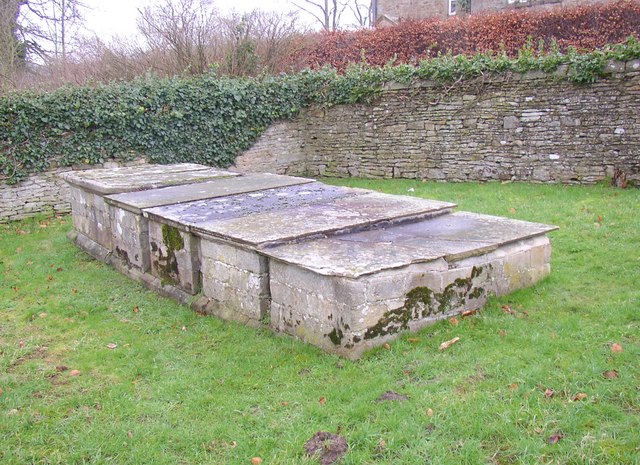
Of course not everyone found it easy to forswear a memorial for their loved ones and Quaker minute books record the ways in which different meetings dealt with the problem. For example in Norwich the first formal request for a gravestone was made in 1692, when 'the sense of the Meeting was wholly against it and that for the future, none be permitted to set up any'. However the minute goes on to say that Friends will endeavour to persuade those who have set up any to remove them. Some could not be persuaded, such as Anne Byars who set up a table tombstone for her husband's grave. There is a series of minutes from which it is clear that they tried several times, but each time had to report failure. Finally in the 1720s, there is reference to the fact that she now shares the same stone and this minute has a distinct note of resignation. There is at least one other example of a table tomb that I know of, at Farfield in Yorkshire.
Table tombs at Farfield

The question of whether or not to allow gravestones rumbled on until Yearly Meeting of 1850 which agreed that they were permissable so long as they were plain in design and contained only the name of the deceased, his or her age and the date of death. As burial grounds are under the care of each area meeting consistency is only asked for within each graveyard. Sometimes the stones are laid flat, sometimes upright and the lettering can be in a variety of configurations. 
Liverpool burial ground
Undercliff burial ground Bradford


A gravestone from Pales, Powys
I have spent a lot of time in Quaker graveyards up and down the country and I have always found them places of peace and contemplation in which I have felt close to my Quaker foremothers and forefathers. As William G Sewell put it in Quaker Faith & Practice 10.08 'The gravestones speak of the past, of those who also served the meeting, whose lives are woven into ours, as ours will affect those still to come.'